
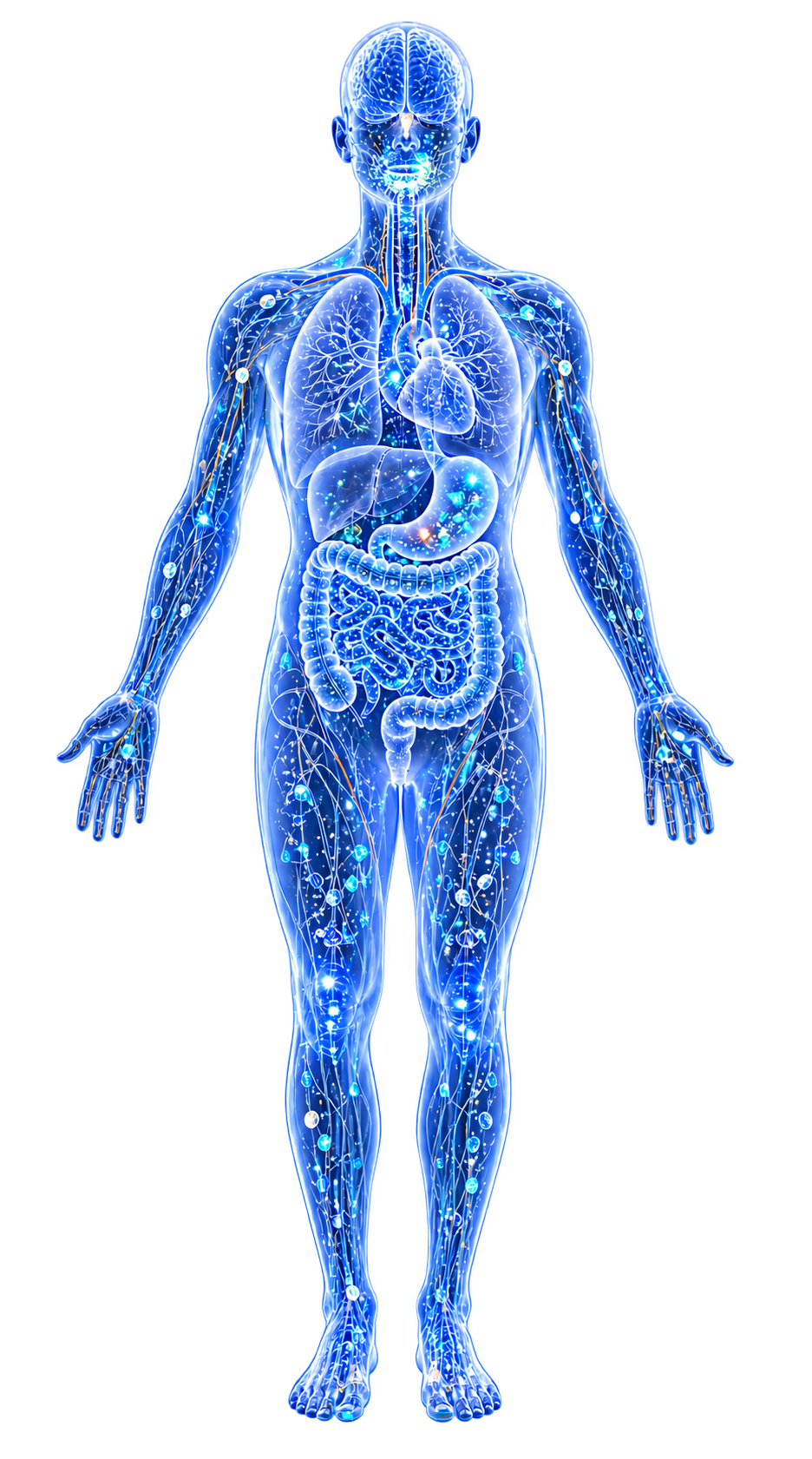
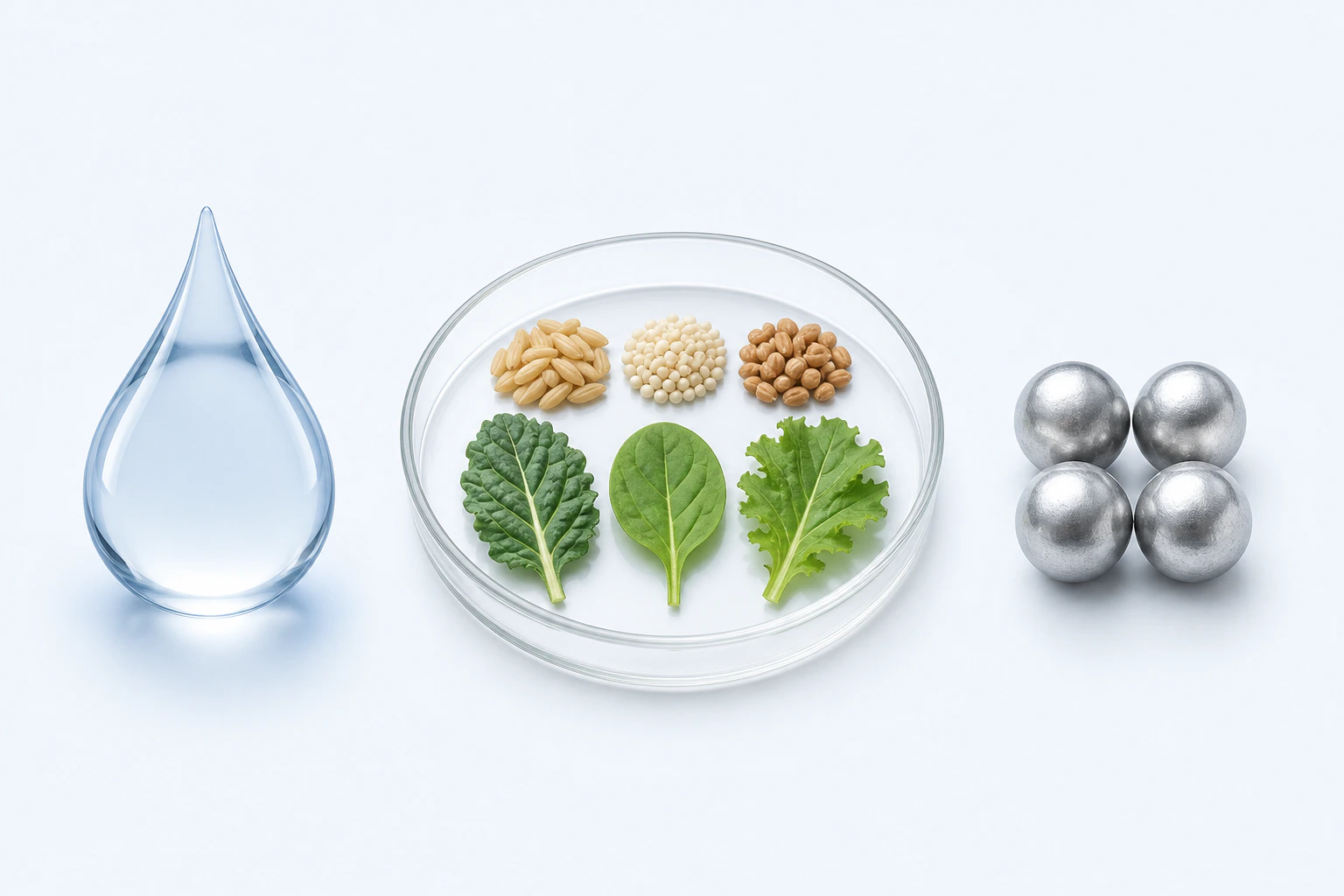
Dietary cadmium-exposure context. Separation does not establish cadmium in a depicted matrix and does not identify a food, cadmium compound, concentration, dose, threshold, test result, toxicity, or individual risk.
Scientific media record2 verified identifiers
- Subject
- Dietary Cadmium Exposurebiological-process
- Review
- Editorial review completeIdentifiers authority-verified · Accessibility validated · · dietary-cadmium-exposure|dietary-cadmium-exposure-mechanism-v1.webp
- Digital source
- Trained-algorithmic mediaCreated with a trained generative algorithm and reviewed by WikiBiome for subject identity, scientific framing, identifiers, provenance, and accessibility.
- Scientific basis
- Cadmium — Medical Subject HeadingsToxicological Profile for CadmiumDietary Cadmium Exposure
- License
- CC BY-SA 4.0Created
Cadmium (cadmium (Cd)) enters the human body primarily through food. Unlike Nickel, which has high-concentration food categories that can be avoided, cadmium contamination is diffuse—embedded in staple crops, leafy greens, and grains that form the basis of most dietary patterns worldwide.
Evidence map6 cited passagesInspect provenance +
Soil contamination. Phosphate fertilizers are the largest anthropogenic cadmium source in agricultural soils. Sewage sludge application, industrial emissions, and atmospheric deposition also contribute. Once in soil, cadmium has a half-life measured in decades—it accumulates over successive growing seasons.
Plant uptake. Cadmium enters plants through the same calcium (Ca²⁺) and zinc (Zn²⁺) transporters that absorb essential minerals. This is a key example of mis metallation—toxic metals hijacking essential metal channels. Plants cannot distinguish cadmium from calcium at the transporter level, so cadmium-contaminated soil produces cadmium-contaminated crops r
Critical detail: Rice is the dominant global cadmium source not because it has the highest concentration per kilogram, but because of its enormous consumption volume. In Asian diets, rice can contribute 40-60% of total dietary cadmium.
Infants face disproportionate cadmium exposure through two mechanisms:
Immature detoxification. Infants have lower metallothionein expression, immature renal clearance, and higher gut absorption rates. The developmental window from 6-24 months—when solid foods are introduced—coincides with maximum vulnerability to cadmium accumulation.
High-fat diets amplify cadmium accumulation—mice on HFD showed increased Cd retention in liver and kidney compared to normal diet controls, with corresponding dysbiotic shifts.
Contents
1. How Cadmium Enters the Food Supply2. Cadmium Content in Foods3. Absorption and the Role of Nutritional Status4. Infant Vulnerability5. Cadmium, Diet, and the Gut Microbiome6. Regulatory Landscape7. ConnectionsHow Cadmium Enters the Food Supply#
Cadmium reaches food through three primary routes:
Soil contamination. Phosphate fertilizers are the largest anthropogenic cadmium source in agricultural soils. Sewage sludge application, industrial emissions, and atmospheric deposition also contribute.
Once in soil, cadmium has a half-life measured in decades—it accumulates over successive growing seasons.[1]Toxic Mechanisms of Five Heavy Metals: Mercury, Lead, Chromium, Cadmium, and ArsenicBalali-Mood M, Naseri K, Tahergorabi Z et al. · 2021Open reference 1 ↓
Plant uptake. Cadmium enters plants through the same calcium (calcium (Ca)²⁺) and zinc (zinc (Zn)²⁺) transporters that absorb essential minerals. This is a key example of Mis-Metallation—toxic metals hijacking essential metal channels.
Plants cannot distinguish cadmium from calcium at the transporter level, so cadmium-contaminated soil produces cadmium-contaminated crops regardless of species.[2]Age-Window Metabolic and Toxicokinetic Vulnerability in Vegetable-Based Baby Foods: Separating Developmental Readiness from Toxicant SusceptibilityKaren Pendergrass · 2026Open reference 2 ↓
Bioconcentration. Certain plant families actively concentrate cadmium above soil levels (bioconcentration factor >1.0). Leafy greens and root vegetables are particularly efficient cadmium accumulators.
Cadmium Content in Foods#
The major dietary cadmium sources, ranked by contribution to total intake:
| Food Category | cadmium (Cd) Content Range | Notes |
|---|---|---|
| Rice | 0.01-0.40 mg/kg | Highest single-food contributor globally; paddy flooding mobilizes soil cadmium |
| Leafy greens (spinach, lettuce) | 0.01-0.25 mg/kg | Hyperaccumulator crops; organic ≠ lower cadmium |
| Root vegetables (carrots, potatoes) | 0.01-0.10 mg/kg | Direct soil contact increases uptake |
| Wheat and cereals | 0.01-0.08 mg/kg | Staple crop, high consumption volume |
| Chocolate/cocoa | 0.01-0.30 mg/kg | Cacao trees accumulate cadmium from volcanic soils (Latin America) |
| Shellfish (oysters, mussels) | 0.05-2.0 mg/kg | Filter-feeders concentrate waterborne cadmium |
| Organ meats (kidney, liver) | 0.05-1.0 mg/kg | Bioaccumulation in animal excretory organs |
| Sunflower seeds | 0.02-0.20 mg/kg | Sunflowers are known cadmium hyperaccumulators |
Critical detail: Rice is the dominant global cadmium source not because it has the highest concentration per kilogram, but because of its enormous consumption volume. In Asian diets, rice can contribute 40-60% of total dietary cadmium.[1]Toxic Mechanisms of Five Heavy Metals: Mercury, Lead, Chromium, Cadmium, and ArsenicBalali-Mood M, Naseri K, Tahergorabi Z et al. · 2021Open reference 1 ↓
Absorption and the Role of Nutritional Status#
Cadmium absorption from the GI tract is typically 3-8% in adults, but this increases dramatically under specific conditions. Iron deficiency increases cadmium absorption 2-3x via upregulated DMT1 (divalent metal transporter 1)—the same transporter handles both iron (Fe)²⁺ and cadmium (Cd)²⁺. This is another Mis-Metallation pathway.
Calcium deficiency increases cadmium absorption through shared calcium channels. Zinc deficiency reduces metallothionein production, decreasing the body's cadmium-binding capacity. Low protein intake reduces metallothionein synthesis.
This creates a vulnerability paradox: populations with the worst nutritional status absorb the most cadmium from identical dietary exposure.
Infant Vulnerability#
Infants face disproportionate cadmium exposure through two mechanisms:[3]The contribution of infant formula to the food survey-based dietary exposure of nine selected elementsHopfner T, Wollenberg M, Jager A et al. · 2025Open reference 3 ↓
Formula and baby foods. German infant formula analysis found cadmium contributed up to 178% of the Tolerable Weekly Intake (TWI) in highly exposed infants. Vegetable-based baby foods (carrots, spinach, sweet potatoes) are among the highest-cadmium commercial infant food products.
Immature detoxification. Infants have lower metallothionein expression, immature renal clearance, and higher gut absorption rates. The developmental window from 6-24 months—when solid foods are introduced—coincides with maximum vulnerability to cadmium accumulation.[2]Age-Window Metabolic and Toxicokinetic Vulnerability in Vegetable-Based Baby Foods: Separating Developmental Readiness from Toxicant SusceptibilityKaren Pendergrass · 2026Open reference 2 ↓
Cadmium, Diet, and the Gut Microbiome#
Dietary cadmium exposure alters gut microbial composition in ways that compound its toxicity. High-fat diets amplify cadmium accumulation—mice on HFD showed increased cadmium (Cd) retention in liver and kidney compared to normal diet controls, with corresponding dysbiotic shifts.[4]High-fat diet affects heavy metal accumulation and toxicity to mice liver and kidney probably via gut microbiotaLiu T, Liang X, Lei C et al. · 2020Open reference 4 ↓
Cadmium depletes Glutathione (GSH)—the primary intracellular antioxidant and cadmium detoxification molecule. Chronic low-level exposure progressively exhausts glutathione reserves.
Cadmium and arsenic co-exposure (common in rice-based diets) produces synergistic gut microbiota disruption and liver toxicity beyond what either metal causes alone Zhang et al. 2015.
Regulatory Landscape#
- EFSA TWI: 2.5 μg/kg body weight/week
- JECFA PTMI: 25 μg/kg body weight/month
- Codex Alimentarius: Maximum levels set for rice (0.4 mg/kg), wheat (0.2 mg/kg), leafy vegetables (0.2 mg/kg), cocoa products (variable by category)
- No FDA action level for cadmium in infant foods (as of 2026)
Connections#
- Cadmium—the metal entity page
- Mis-Metallation—cadmium enters through calcium and zinc channels
- Glutathione (GSH)—primary cadmium detoxification molecule, depleted by chronic exposure
- Heavy Metals in Infant Foods—cadmium in baby food and formula
- Dietary Nickel Exposure—parallel dietary metal exposure pathway
- Plant Metal Hyperaccumulation—why certain crops concentrate cadmium
- Oxidative Stress—cadmium-driven ROS generation via Fenton chemistry
References 6
Numbered by first appearance in the article, then reconciled with its declared source list.
- 1
★Balali-Mood M, Naseri K, Tahergorabi Z et al. (2021). Toxic Mechanisms of Five Heavy Metals: Mercury, Lead, Chromium, Cadmium, and Arsenic. Frontiers in Pharmacology.
- 2
Karen Pendergrass (2026). Age-Window Metabolic and Toxicokinetic Vulnerability in Vegetable-Based Baby Foods: Separating Developmental Readiness from Toxicant Susceptibility. Zenodo Preprint.
- 3
Hopfner T, Wollenberg M, Jager A et al. (2025). The contribution of infant formula to the food survey-based dietary exposure of nine selected elements. Journal of Environmental Exposure Assessment.
- 4
Liu T, Liang X, Lei C et al. (2020). High-fat diet affects heavy metal accumulation and toxicity to mice liver and kidney probably via gut microbiota. Frontiers in Microbiology.
- 5
O. O. Agboola, S. Oyedeji, T. A. Olawoyin et al. (2023). Levels of Heavy Metals and Potential Human Health Risks via Consumption of Leafy Vegetables Purchased in Popular Local Market in Lagos, Nigeria. Journal of Applied Sciences and Environmental Management.
- 6
Songbin Zhang, Yuanxiang Jin, Zhaoyang Zeng et al. (2015). Subchronic Exposure of Mice to Cadmium Perturbs Their Hepatic Energy Metabolism and Gut Microbiome. Chemical Research in Toxicology.
Article network
Mentioned here 8
Pages linking here 9
Connect the evidence
Publicly readable discussion by ORCID-authenticated researchers. Questions, interpretation, methods, corrections, and new evidence stay attached to this record.
No discussion yet. Start with a precise question or a source-backed observation.
Activity and accepted changes
Accepted researcher context, editorial status, public discussion, and upstream Git revisions are shown together. Pending, declined, and withdrawn proposals remain private.
- published revision
fix: reconcile WikiBiome source metadata
Karen Pendergrass · +1 −1
Inspect exact Git diff ↗ - published revision
massive wiki expansion: 149 stubs fixed, 100+ new pages, Rule 15 scan, keystone papers
WikiBiome Deploy Bot · +18 −18
Inspect exact Git diff ↗ - published revision
ingest: 87 papers (17 endometriosis, 67 erectile dysfunction, 3 cross-condition)
WikiBiome Deploy Bot · +1 −1
Inspect exact Git diff ↗ - published revision
nightly maintenance: 94 stub demotions, 181 source_count fixes, 22 auto-discovered stubs, 5 adversarial audits, 3 boundary fixes, 3 evidence-level corrections
WikiBiome Deploy Bot · +1 −0
Inspect exact Git diff ↗ - published revision
pre-overnight checkpoint 2026-04-18
WikiBiome Deploy Bot · +3 −0
Inspect exact Git diff ↗ - published revision
WikiBiome update — 2026-04-15 17:23
WikiBiome Deploy Bot · +0 −1
Inspect exact Git diff ↗ - published revision
WikiBiome update — integrity fixes, metallomic diet pages, cross-condition analyses
WikiBiome Deploy Bot · +90 −0
Inspect exact Git diff ↗