
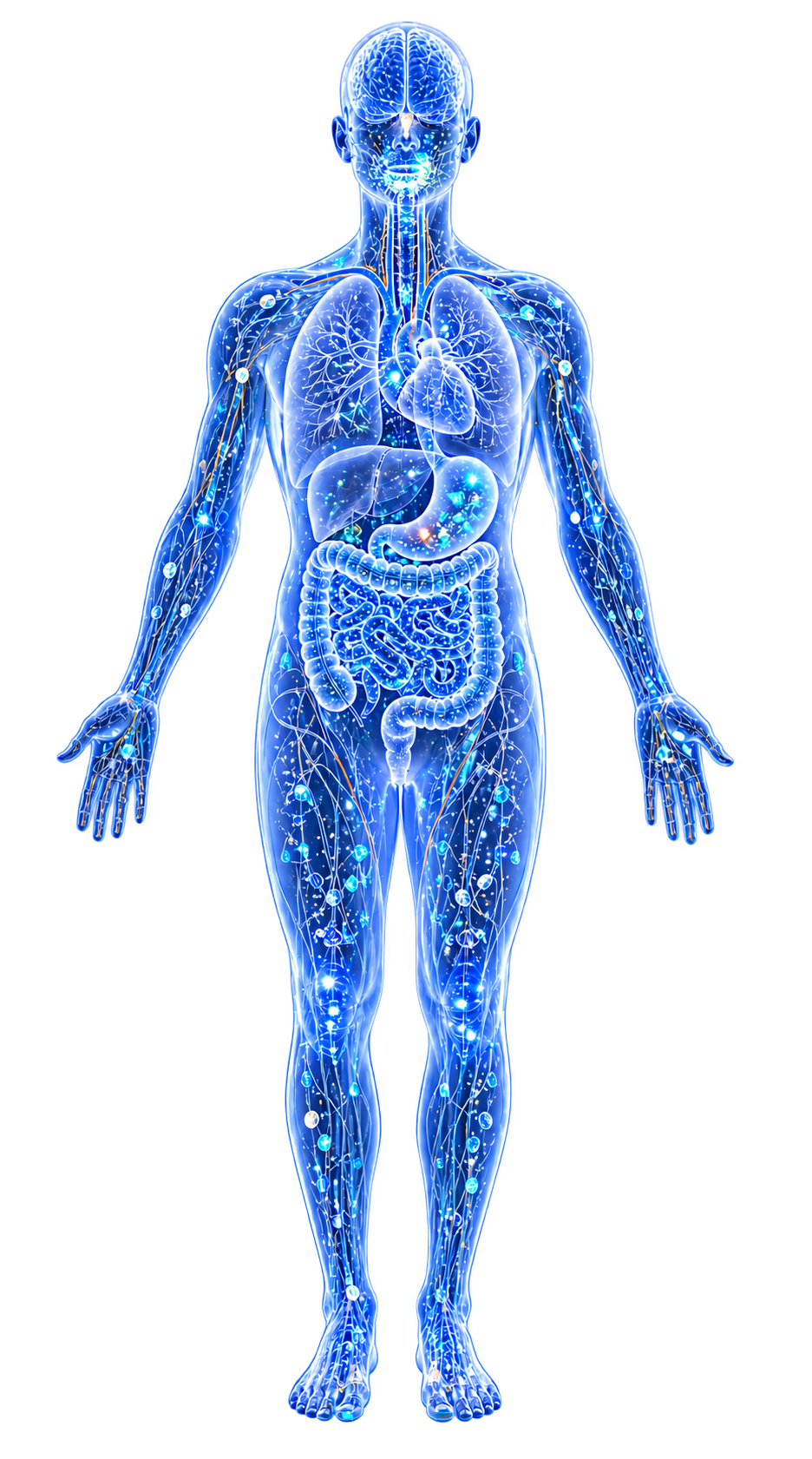
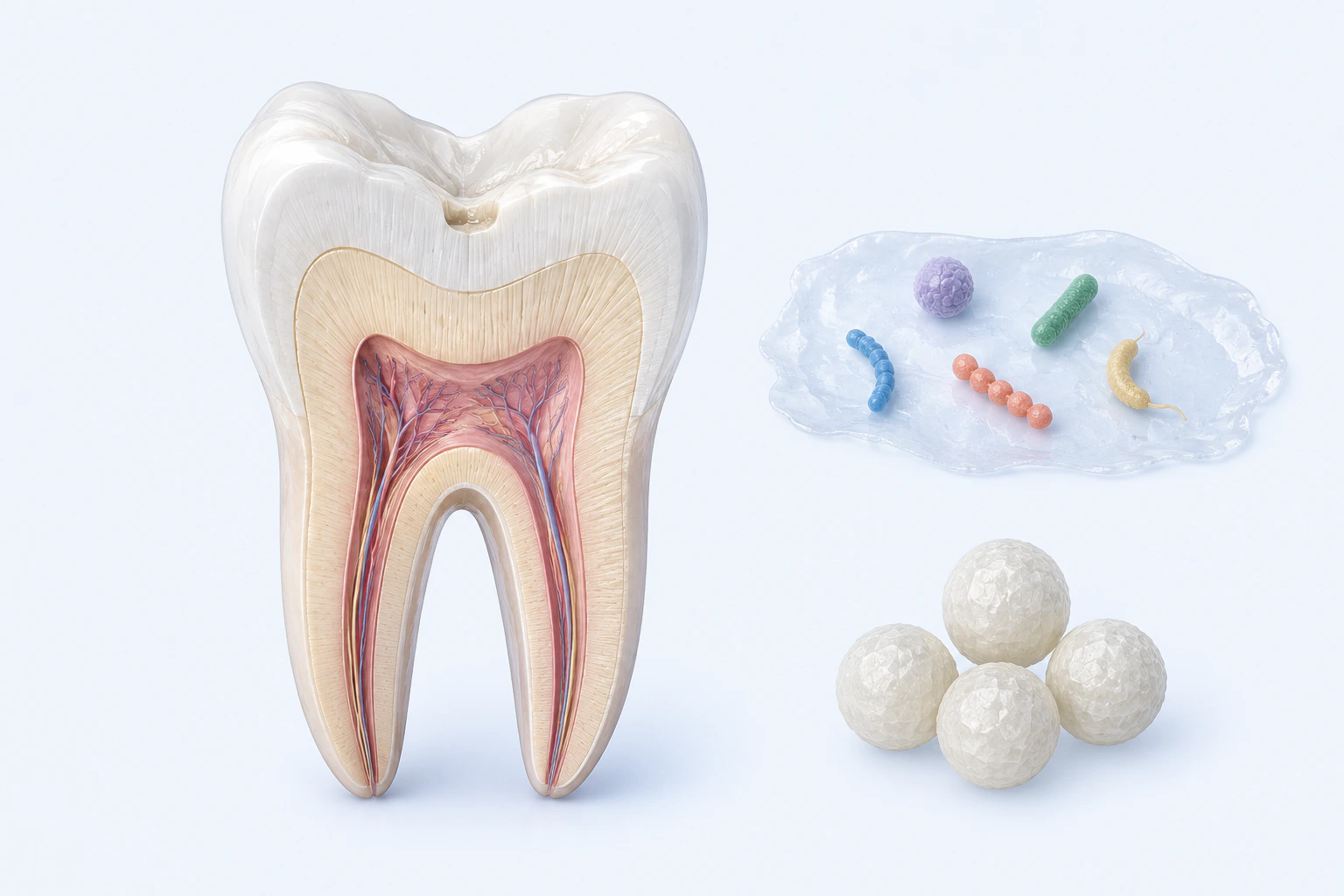
Dental-caries orientation. This is not a patient lesion or radiograph and does not establish lesion activity, depth or stage, a named organism, causal measurement, symptoms, prognosis, or treatment guidance.
Scientific media record2 verified identifiers
- Subject
- Dental Cariescondition
- Identifiers
- WikiBiome:dental-cariesMeSH:D003731
- Review
- Editorial review completeIdentifiers authority-verified · Accessibility validated · · dental-caries|dental-caries-mechanism-v1.webp
- Digital source
- Trained-algorithmic mediaCreated with a trained generative algorithm and reviewed by WikiBiome for subject identity, scientific framing, identifiers, provenance, and accessibility.
- Scientific basis
- Dental Caries — Medical Subject HeadingsTooth Demineralization — Medical Subject HeadingsThe Tooth Decay ProcessDental Caries
- License
- CC BY-SA 4.0Created
Dental caries (tooth decay) is the most prevalent chronic disease worldwide, driven by acid-producing biofilm bacteria—primarily Streptococcus mutans and Lactobacillus species—that demineralize tooth enamel.
In the WikiBiome framework, dental caries connects to the oral-systemic axis: cariogenic bacteria and their metabolic products enter the systemic circulation, and conditions like GERD alter oral pH to promote caries.[1]Laryngopharyngeal reflux, gastroesophageal reflux and dental disorders: A systematic reviewLechien JR, Chiesa-Estomba CM, Calvo Henriquez C et al. · 2020Open reference 1 ↓
Evidence map4 cited passagesInspect provenance +
Dental caries (tooth decay) is the most prevalent chronic disease worldwide, driven by acid-producing biofilm bacteria—primarily Streptococcus mutans and Lactobacillus species—that demineralize tooth enamel. In the WikiBiome framework, dental caries connects to the oral-systemic axis: cariogenic bacteria and their metabolic products enter the systemic ci
Zinc: Zinc-containing oral hygiene agents inhibit S. mutans biofilm formation and acid production—a metal-dependent antimicrobial strategy.
Oral and gut microbiota show correlated dysbiosis patterns in cerebral palsy and epilepsy.
Cariogenic Lactobacillus species may also affect thyroid health via oral-gut translocation.
Metal Connection#
Zinc: Zinc-containing oral hygiene agents inhibit S. mutans biofilm formation and acid production—a metal-dependent antimicrobial strategy.[2]Katrak 2026 — Oral Hygiene Agents at Work: Effects on Streptococcus mutans and Caries RiskCallahan Katrak, Sydney Reed, Miranda Carter et al. · 2026Open reference 2 ↓
Fluoride: Fluorapatite formation protects enamel; fluoride also inhibits bacterial enolase (a metalloenzyme).
Oral-Gut Interactions#
Oral and gut microbiota show correlated Dysbiosis patterns in cerebral palsy and epilepsy.[3]Huang 2022 — Correlations Between Gastrointestinal and Oral Microbiota in Children With Cerebral Palsy and EpilepsyCongfu Huang, Chunuo Chu, Yuanping Peng et al. · 2022Open reference 3 ↓ Cariogenic Lactobacillus species may also affect thyroid health via oral-gut translocation.[4]The Occurrence of Lactobacillus and Candida albicans in Patients with Thyroid DisordersHarbi RH, Mahmood MA · 2024Open reference 4 ↓
Cross-References#
- Periodontitis—related oral disease (different pathobionts)
- Biofilm—cariogenic biofilm (dental plaque)
- Zinc—zinc-based anticariogenic agents
- Porphyromonas gingivalis—periodontal pathogen (distinct from cariogenic bacteria)
References 4
Numbered by first appearance in the article, then reconciled with its declared source list.
- 1
Lechien JR, Chiesa-Estomba CM, Calvo Henriquez C et al. (2020). Laryngopharyngeal reflux, gastroesophageal reflux and dental disorders: A systematic review. PLoS ONE.
- 2
Callahan Katrak, Sydney Reed, Miranda Carter et al. (2026). Katrak 2026 — Oral Hygiene Agents at Work: Effects on Streptococcus mutans and Caries Risk. Frontiers in Cellular and Infection Microbiology.
- 3
Congfu Huang, Chunuo Chu, Yuanping Peng et al. (2022). Huang 2022 — Correlations Between Gastrointestinal and Oral Microbiota in Children With Cerebral Palsy and Epilepsy. Frontiers in Pediatrics.
- 4
Harbi RH, Mahmood MA (2024). The Occurrence of Lactobacillus and Candida albicans in Patients with Thyroid Disorders. Misan Journal for Academic Studies.
Article network
Mentioned here 5
Connect the evidence
Publicly readable discussion by ORCID-authenticated researchers. Questions, interpretation, methods, corrections, and new evidence stay attached to this record.
No discussion yet. Start with a precise question or a source-backed observation.
Activity and accepted changes
Accepted researcher context, editorial status, public discussion, and upstream Git revisions are shown together. Pending, declined, and withdrawn proposals remain private.
- published revision
Complete corpus-wide Dysbiosis linking
Karen Pendergrass · +1 −1
Inspect exact Git diff ↗ - published revision
massive wiki expansion: 149 stubs fixed, 100+ new pages, Rule 15 scan, keystone papers
WikiBiome Deploy Bot · +40 −0
Inspect exact Git diff ↗