

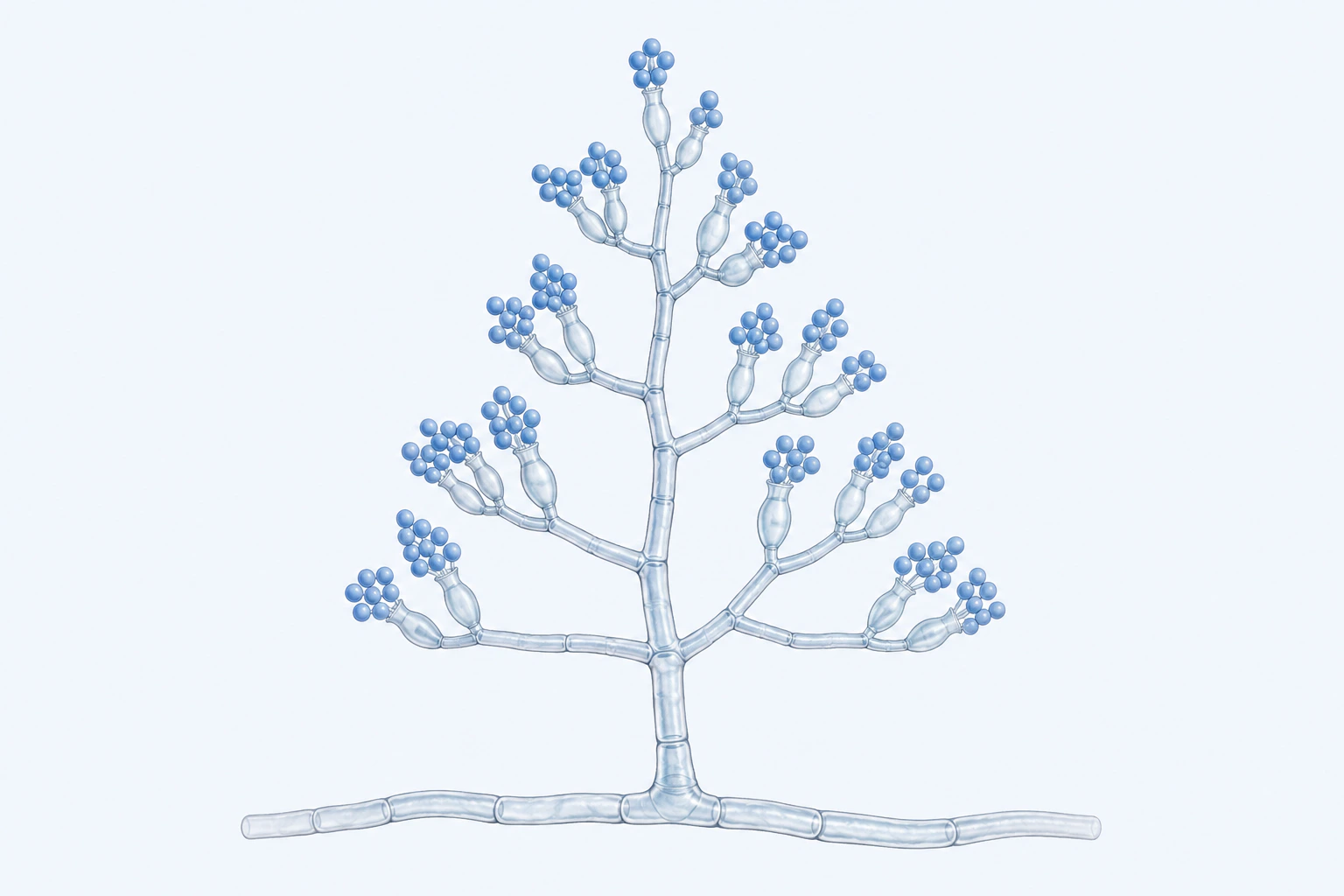
Type-species-anchored Trichoderma reconstruction showing one complete conidiophore system. Representative, non-diagnostic, and not a micrograph.
Scientific media record1 verified identifier
- Subject
- Trichodermataxon · genus
- Identifiers
- NCBITaxon:5543
- Review
- Editorial review completeIdentifiers authority-verified · Accessibility validated · · trichoderma|trichoderma-morphology-v1.webp
- Digital source
- Trained-algorithmic mediaCreated with a trained generative algorithm and reviewed by WikiBiome for subject identity, scientific framing, identifiers, provenance, and accessibility.
- Scientific basis
- Trichoderma — NCBI TaxonomyTrichoderma ultrastructural morphology — PHIL 23104Trichoderma viride 32098
- License
- CC BY-SA 4.0Created
Trichoderma is a genus of filamentous ascomycete fungi ubiquitous in soil and plant root ecosystems. Best known as a biological control agent against plant pathogens, Trichoderma species produce an arsenal of hydrolytic enzymes and antimicrobial compounds. Rarely, they cause invasive infections in severely immunocompromised humans.
Metal Dependencies#
Trichoderma species are prolific siderophore producers, synthesizing hydroxamate-type siderophores that sequester iron from the environment with high affinity. This iron-scavenging capacity is central to their biocontrol activity—they starve competing fungi of iron. They also require zinc for metalloprotease activity and copper for laccase-mediated lignin degradation.
Ecological Role#
In soil, Trichoderma outcompetes pathogenic fungi through a combination of Siderophore Competition, direct mycoparasitism (attacking other fungi with chitinases), and antibiotic production. In the gut mycobiome, Trichoderma appears transiently through dietary exposure.
Its siderophore production could theoretically modulate iron availability for gut bacteria, though this has not been systematically studied in vivo.
Conditions Associated#
Invasive Trichoderma infections are rare, almost exclusively occurring in patients with severe immunosuppression (transplant recipients, peritoneal dialysis). T. longibrachiatum is the most commonly reported human pathogen in the genus. These infections can be difficult to treat due to variable antifungal susceptibility.
Cross-References#
- Iron—siderophore-mediated competition
- Siderophore Competition—core ecological strategy
- Candida albicans—iron competition in polymicrobial contexts
- chitinase—mycoparasitic enzyme
References 6
Numbered by first appearance in the article, then reconciled with its declared source list.
- 1
Xiaopeng Li, Jiahui Feng, Zhanggui Wang et al. (2023). Features of combined gut bacteria and fungi from a Chinese cohort of colorectal cancer, colorectal adenoma, and post-operative patients. Frontiers in Microbiology.
- 2
Yichao Shi, Jianfeng Li, Shuntian Cai et al. (2023). Shi 2023 — PPI-Induced Fungal Dysbiosis in Patients with Gastroesophageal Reflux Disease. Frontiers in Cellular and Infection Microbiology.
- 3
Eduardo De Pablo-Fernandez, Huw R Morris, Andrew J Lees et al. (2024). De Pablo-Fernandez 2024 -- The Faecal Metabolome and Mycobiome in Parkinson's Disease. npj Parkinson's Disease.
- 4
Hiroki Mizutani, Shunsuke Fukui, Kazuki Oosuka et al. (2025). Biliary microbiome profiling via 16 S rRNA amplicon sequencing in patients with cholangiocarcinoma, pancreatic carcinoma and choledocholithiasis. Scientific Reports.
- 5
Agnieszka Krawczyk, Tomasz Kasperski, Tomasz Gosiewski et al. (2025). Krawczyk 2025 — Effects of Fecal Microbiota Transplantation on the Abundance and Diversity of Selected Fungal and Archaeal Species in the Gut Microbiota in the Rat Model of Schizophrenia. Pharmacological Reports.
- 6
Tomasz Gosiewski, Dominika Salamon, Magdalena Szopa et al. (2014). Gosiewski 2014 — Quantitative Evaluation of Fungi of the Genus Candida in Feces of Adult Patients with Type 1 and 2 Diabetes. Gut Pathogens.
Article network
Mentioned here 4
Connect the evidence
Publicly readable discussion by ORCID-authenticated researchers. Questions, interpretation, methods, corrections, and new evidence stay attached to this record.
No discussion yet. Start with a precise question or a source-backed observation.
Published page changes
This record shows only material changes published on this page, including changes to its content, evidence, conclusions, or author context. Internal processes and discussion activity are excluded. Pending, declined, and withdrawn proposals remain private.
- published revision
Added references: li-2023-combined-gut-bacteria-fungi-crc-adenoma-chinese-cohort; shi-2023-ppi-fungal-dysbiosis-gerd; de-pablo-fernandez-2024-faecal-metabolome-mycobiome-parkinsons; mizutani-2025-biliary-microbiome-16s-rrna-pdac-cca;…
Added references: li-2023-combined-gut-bacteria-fungi-crc-adenoma-chinese-cohort; shi-2023-ppi-fungal-dysbiosis-gerd; de-pablo-fernandez-2024-faecal-metabolome-mycobiome-parkinsons; mizutani-2025-biliary-microbiome-16s-rrna-pdac-cca; krawczyk-2025-fmt-fungal-archaeal-species-rat-schizophrenia-model; gosiewski-2014-candida-feces-t1d-t2d-pilot-study. · WikiBiome Deploy Bot · +11 −7
Inspect exact Git diff ↗ - published revision
Created “Trichoderma”: Trichoderma is a genus of filamentous ascomycete fungi ubiquitous in soil and plant root ecosystems. Best known as a biological control agent against plant pathogens, Trichoderma species produce an…
Created “Trichoderma”: Trichoderma is a genus of filamentous ascomycete fungi ubiquitous in soil and plant root ecosystems. Best known as a biological control agent against plant pathogens, Trichoderma species produce an… Published sections: Overview; Metal Dependencies; Ecological Role; Conditions Associated; Cross-References. · WikiBiome Deploy Bot · +57 −0
Inspect exact Git diff ↗