
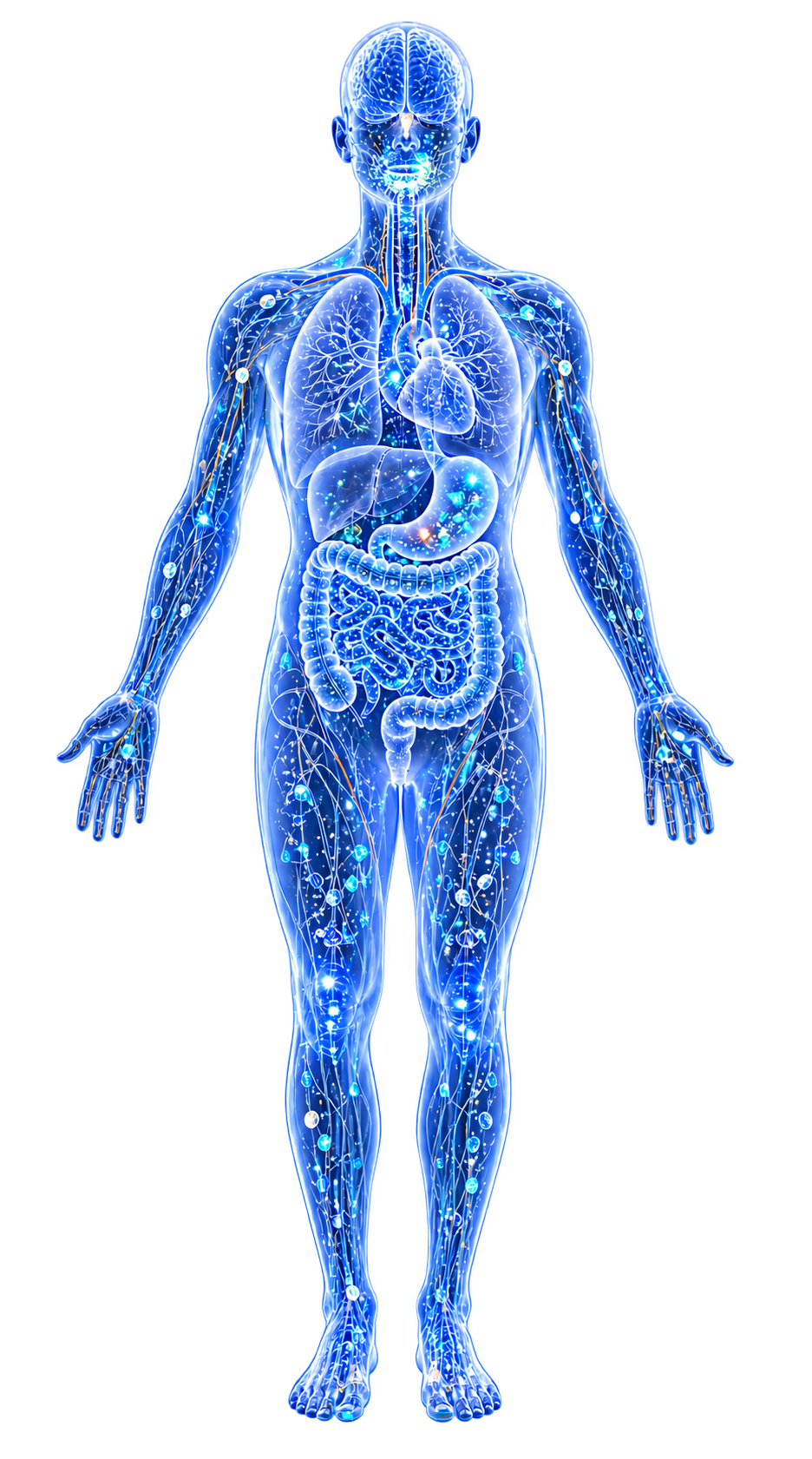
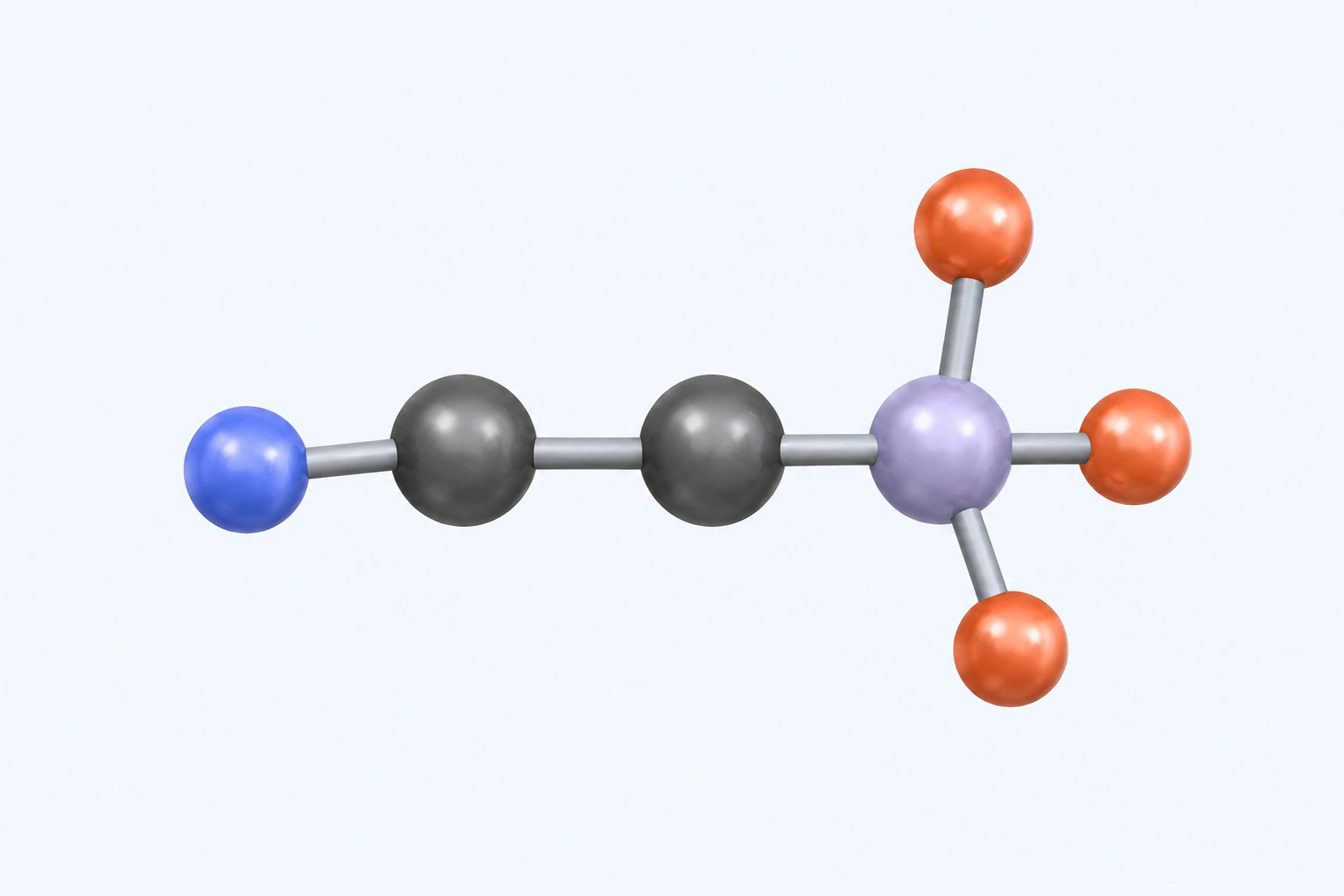
Heavy-atom connectivity orientation for taurine (2-aminoethanesulfonic acid). Hydrogens, formal charge, protonation state, and measured conformation are intentionally not shown; this is an educational reconstruction, not an experimental structure.
Scientific media record3 verified identifiers
- Subject
- Taurinebiological-process
- Identifiers
- WikiBiome:taurinePubChem:1123ChEBI:15891
- Review
- Editorial review completeIdentifiers authority-verified · Accessibility validated · · taurine|taurine-mechanism-v1.webp
- Digital source
- Trained-algorithmic mediaCreated with a trained generative algorithm and reviewed by WikiBiome for subject identity, scientific framing, identifiers, provenance, and accessibility.
- Scientific basis
- Taurine — PubChemTaurine — ChEBIVersatile Triad Alliance: Bile Acid, Taurine and MicrobiotaTaurine
- License
- CC BY-SA 4.0Created
Taurine (2-aminoethanesulfonic acid) is a sulfur-containing amino acid abundant in bile, heart, brain, and retina. Its primary metabolic role is bile acid conjugation—taurocholate and taurochenodeoxycholate are the taurine-conjugated primary bile acids that BSH-producing gut bacteria deconjugate, releasing free taurine into the colonic lumen.
Taurine also functions as an antioxidant, osmoregulator, membrane stabilizer, and weak metal chelator.
Evidence map2 cited passagesInspect provenance +
BSH deconjugation releases taurine → colonic taurine is metabolized by sulfate-reducing bacteria (desulfovibrio) to produce hydrogen sulfide. High-taurine diets (meat-rich) thus indirectly increase H₂S production.
Taurine supplementation shows cardiovascular protective effects via anti-inflammatory and antioxidant mechanisms.
Microbiome Interface#
BSH deconjugation releases taurine → colonic taurine is metabolized by sulfate-reducing bacteria (Desulfovibrio) to produce Hydrogen Sulfide (H₂S). High-taurine diets (meat-rich) thus indirectly increase H₂S production.[1]Rezen et al. 2022 — The Role of Bile Acids in CarcinogenesisRezen T, Rozman D, Kovacs T et al. · 2022Open reference 1 ↓
Taurine supplementation shows cardiovascular protective effects via anti-inflammatory and antioxidant mechanisms.[2]Fermented Food: Should Patients with Cardiometabolic Diseases Go Back to an Early Neolithic Diet?Denise Mafra, Natalia A. Borges, Livia Alvarenga et al. · 2022Open reference 2 ↓[3]Microbiota-derived short-chain fatty acids: Implications for cardiovascular and metabolic diseaseYingdong Lu, Yang Zhang, Xin Zhao et al. · 2022Open reference 3 ↓
Cross-References#
- Bile Salt Hydrolase (BSH)—releases taurine from conjugated bile acids
- Bile Acid Metabolism—taurine conjugation context
- Hydrogen Sulfide (H₂S)—taurine as sulfur source for H₂S production
- Desulfovibrio—taurine-metabolizing sulfate reducer
References 3
Numbered by first appearance in the article, then reconciled with its declared source list.
- 1
Rezen T, Rozman D, Kovacs T et al. (2022). Rezen et al. 2022 — The Role of Bile Acids in Carcinogenesis. Cellular and Molecular Life Sciences.
- 2
Denise Mafra, Natalia A. Borges, Livia Alvarenga et al. (2022). Fermented Food: Should Patients with Cardiometabolic Diseases Go Back to an Early Neolithic Diet?. Critical Reviews in Food Science and Nutrition.
- 3
Yingdong Lu, Yang Zhang, Xin Zhao et al. (2022). Microbiota-derived short-chain fatty acids: Implications for cardiovascular and metabolic disease. Frontiers in Cardiovascular Medicine.
Article network
Mentioned here 4
Pages linking here 1
Connect the evidence
Publicly readable discussion by ORCID-authenticated researchers. Questions, interpretation, methods, corrections, and new evidence stay attached to this record.
No discussion yet. Start with a precise question or a source-backed observation.
Published page changes
This record shows only material changes published on this page, including changes to its content, evidence, conclusions, or author context. Internal processes and discussion activity are excluded. Pending, declined, and withdrawn proposals remain private.
- published revision
Created “Taurine”: Taurine (2-aminoethanesulfonic acid) is a sulfur-containing amino acid abundant in bile, heart, brain, and retina. Its primary metabolic role is bile acid conjugation — taurocholate and…
Created “Taurine”: Taurine (2-aminoethanesulfonic acid) is a sulfur-containing amino acid abundant in bile, heart, brain, and retina. Its primary metabolic role is bile acid conjugation — taurocholate and… Published sections: Taurine; Microbiome Interface; Cross-References. · WikiBiome Deploy Bot · +32 −0
Inspect exact Git diff ↗