
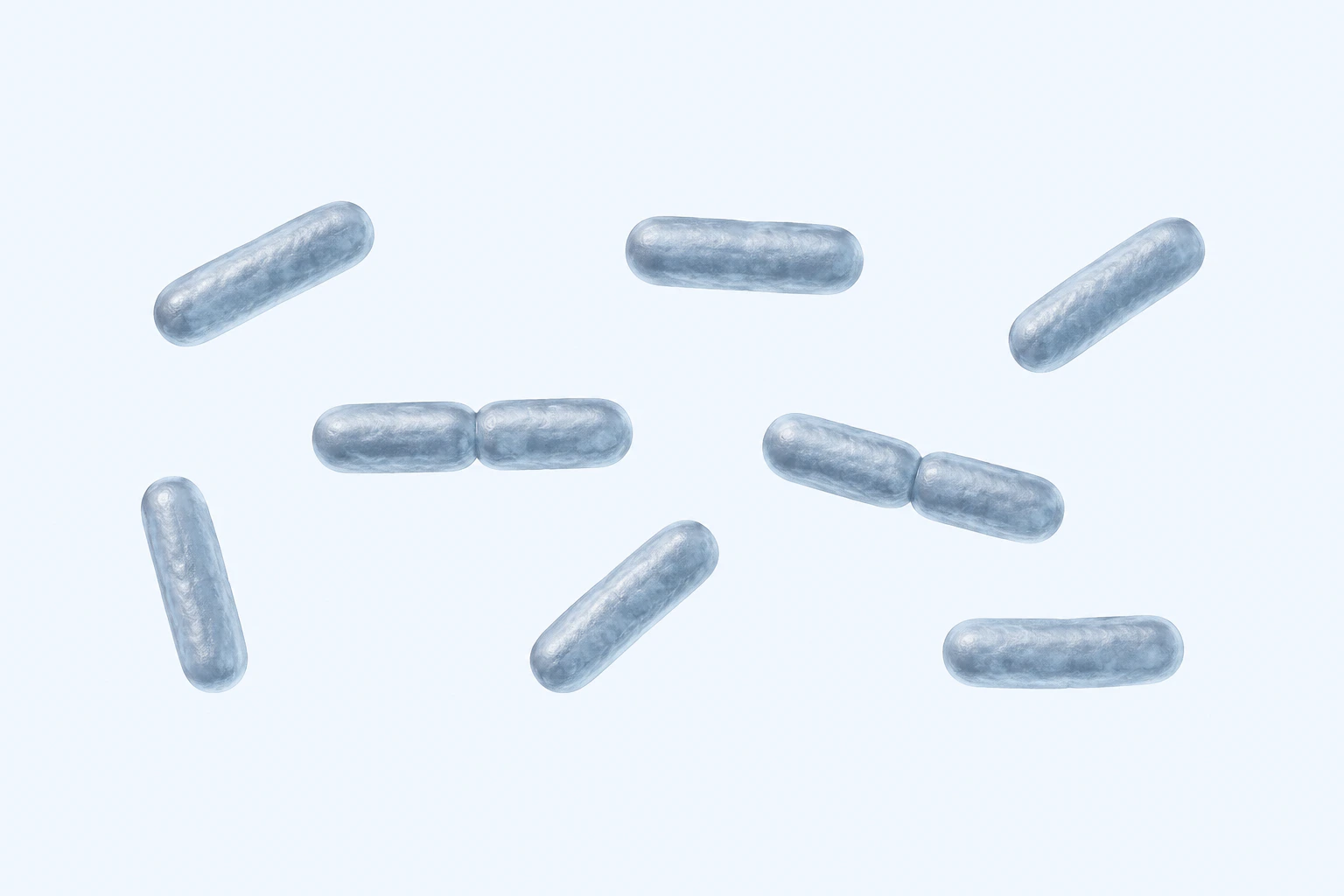
Type-species-anchored Ralstonia reconstruction with ten rods in six single and two paired groupings. Surface structures are intentionally absent because flagellar and motility states are not universal; this plate is representative, non-universal, non-diagnostic, and not a micrograph.
Scientific media record1 verified identifier
- Subject
- Ralstoniataxon · genus
- Identifiers
- NCBITaxon:48736
- Review
- Editorial review completeIdentifiers authority-verified · Accessibility validated · · ralstonia|ralstonia-morphology-v1.webp
- Digital source
- Trained-algorithmic mediaCreated with a trained generative algorithm and reviewed by WikiBiome for subject identity, scientific framing, identifiers, provenance, and accessibility.
- Scientific basis
- Ralstonia — NCBI TaxonomyRalstonia — LPSNRalstonia gen. nov. primary proposalRalstonia pickettii type strain — BacDive
- License
- CC BY-SA 4.0Created
Ralstonia is a genus of Gram-negative, aerobic bacteria in the class Betaproteobacteria. While Wikipedia focuses on R. solanacearum (a plant pathogen), the WikiBiome-relevant species are R. pickettii and R. metallidurans (now Cupriavidus metallidurans)—organisms with extreme multi-metal tolerance that appear in human Gut Microbiome studies, particularly in metal-exposed populations.
Evidence map8 cited passagesInspect provenance +
CzcCBA exports cobalt, cadmium, zinc, and nickel, conferring survival in heavily contaminated environments.
This efflux system is the prototype for co-selection: the same CzcCBA operon that confers metal tolerance also provides resistance to multiple antibiotics, demonstrating how environmental metal pollution drives antibiotic resistance.
Enriched in the gut microbiota of cadmium-exposed rats, consistent with its metal tolerance providing a selective advantage when competing organisms are inhibited by cadmium.
CKD: Enriched in gut microbiota of CKD patients, where uremic toxin accumulation creates a metal-dysregulated environment.
ASD: Altered in gut microbiota of constipated ASD children.
Infant metal exposure: Ralstonia abundance correlates with infant serum metal levels, suggesting early-life metal exposure shapes Ralstonia colonization.
PCOS: Present in vaginal microbiome of PCOS patients.
Diabetes/MI: Part of gut microbiome shifts in diabetes with myocardial infarction.
Contents
1. Metal Resistance—The CzcCBA Paradigm2. Cadmium-Responsive Enrichment3. Disease Associations4. Cross-ReferencesMetal Resistance—The CzcCBA Paradigm#
R. metallidurans is the reference organism for bacterial heavy metal resistance, harboring the CzcCBA efflux system—the best-characterized multi-metal efflux pump in biology. CzcCBA exports cobalt, cadmium, zinc, and nickel, conferring survival in heavily contaminated environments.[1]Understanding the Development of Environmental Resistance Among Microbes: A ReviewSrivastava J, Chandra H, Singh N et al. · 2016Open reference 1 ↓
This efflux system is the prototype for co-selection: the same CzcCBA operon that confers metal tolerance also provides resistance to multiple antibiotics, demonstrating how environmental metal pollution drives antibiotic resistance.[1]Understanding the Development of Environmental Resistance Among Microbes: A ReviewSrivastava J, Chandra H, Singh N et al. · 2016Open reference 1 ↓
Cadmium-Responsive Enrichment#
Ralstonia abundance increases in response to cadmium exposure in animal models. Enriched in the gut microbiota of cadmium-exposed rats, consistent with its metal tolerance providing a selective advantage when competing organisms are inhibited by cadmium.[2]Liu 2023 — Environmental cadmium exposure alters the internal microbiota and metabolome of Sprague–Dawley ratsLiu S, Deng X, Li Z et al. · 2023Open reference 2 ↓[3]Environmental cadmium exposure alters the internal microbiota and metabolome of Sprague-Dawley ratsSongqing Liu, Xin Deng, Zheng Li et al. · 2023Open reference 3 ↓
The enrichment pattern suggests Ralstonia as a potential biomarker of environmental metal exposure in gut microbiome profiling.
Disease Associations#
CKD: Enriched in gut microbiota of CKD patients, where uremic toxin accumulation creates a metal-dysregulated environment.[4]Liu 2023 — Changes in Gut Microbial Community upon Chronic Kidney DiseaseWu Liu, Jiaqi Huang, Tong Liu et al. · 2023Open reference 4 ↓ ASD: Altered in gut microbiota of constipated ASD children.[5]He 2023 — Altered Gut Microbiota and Short-Chain Fatty Acids in Chinese Children with Constipated Autism Spectrum DisorderJianquan He, Xiuhua Gong, Bing Hu et al. · 2023Open reference 5 ↓
Infant metal exposure: Ralstonia abundance correlates with infant serum metal levels, suggesting early-life metal exposure shapes Ralstonia colonization.[6]Yan 2025 — Association Between Infants' Serum Levels of 26 Metals and Gut Microbiota: A Hospital-Based Cross-Sectional Study in ChinaXing Yan, Jun Qiu, Ruiwen Huang et al. · 2025Open reference 6 ↓
PCOS: Present in vaginal microbiome of PCOS patients.[7]Zheng 2024 — Differential enrichment of bacteria and phages in vaginal microbiomes in PCOS and obesity: shotgun sequencing analysisZheng S, Chen H, Yang H et al. · 2024Open reference 7 ↓ Diabetes/MI: Part of gut microbiome shifts in diabetes with myocardial infarction.[8]A metagenomic study of the gut microbiome in patients with type 2 diabetes mellitus and myocardial infarctionHonghong Zhang, Changlin Zhai, Huilin Hu et al. · 2026Open reference 8 ↓
Cross-References#
- Cadmium—Ralstonia enrichment under cadmium exposure
- Co-Selection—CzcCBA paradigm for metal-antibiotic co-resistance
- Antimicrobial Resistance—metal efflux pumps conferring cross-resistance
- Chronic Kidney Disease—enriched in CKD gut microbiota
- Environmental Metal Exposure—Ralstonia as biomarker of metal contamination
References 9
Numbered by first appearance in the article, then reconciled with its declared source list.
- 1
Srivastava J, Chandra H, Singh N et al. (2016). Understanding the Development of Environmental Resistance Among Microbes: A Review. Clean - Soil, Air, Water.
- 2
Liu S, Deng X, Li Z et al. (2023). Liu 2023 — Environmental cadmium exposure alters the internal microbiota and metabolome of Sprague–Dawley rats. Frontiers in Veterinary Science.
- 3
Songqing Liu, Xin Deng, Zheng Li et al. (2023). Environmental cadmium exposure alters the internal microbiota and metabolome of Sprague-Dawley rats. Frontiers in Veterinary Science.
- 4
Wu Liu, Jiaqi Huang, Tong Liu et al. (2023). Liu 2023 — Changes in Gut Microbial Community upon Chronic Kidney Disease. PLOS ONE.
- 5
Jianquan He, Xiuhua Gong, Bing Hu et al. (2023). He 2023 — Altered Gut Microbiota and Short-Chain Fatty Acids in Chinese Children with Constipated Autism Spectrum Disorder. Scientific Reports.
- 6
Xing Yan, Jun Qiu, Ruiwen Huang et al. (2025). Yan 2025 — Association Between Infants' Serum Levels of 26 Metals and Gut Microbiota: A Hospital-Based Cross-Sectional Study in China. Frontiers in Microbiology.
- 7
Zheng S, Chen H, Yang H et al. (2024). Zheng 2024 — Differential enrichment of bacteria and phages in vaginal microbiomes in PCOS and obesity: shotgun sequencing analysis. Frontiers in Microbiomes.
- 8
Honghong Zhang, Changlin Zhai, Huilin Hu et al. (2026). A metagenomic study of the gut microbiome in patients with type 2 diabetes mellitus and myocardial infarction. Acta Diabetologica.
- 9
Filipe T. Lira Neto, Marina C. Viana, Federica Cariati et al. (2024). Neto 2024 — Effect of Environmental Factors on Seminal Microbiome and Impact on Sperm Quality. Frontiers in Endocrinology.
Article network
Mentioned here 6
Pages linking here 1
Connect the evidence
Publicly readable discussion by ORCID-authenticated researchers. Questions, interpretation, methods, corrections, and new evidence stay attached to this record.
No discussion yet. Start with a precise question or a source-backed observation.
Activity and accepted changes
Accepted researcher context, editorial status, public discussion, and upstream Git revisions are shown together. Pending, declined, and withdrawn proposals remain private.
- published revision
Backfill gut microbiome concept links
Karen Pendergrass · +1 −1
Inspect exact Git diff ↗ - published revision
massive wiki expansion: 149 stubs fixed, 100+ new pages, Rule 15 scan, keystone papers
WikiBiome Deploy Bot · +64 −0
Inspect exact Git diff ↗