
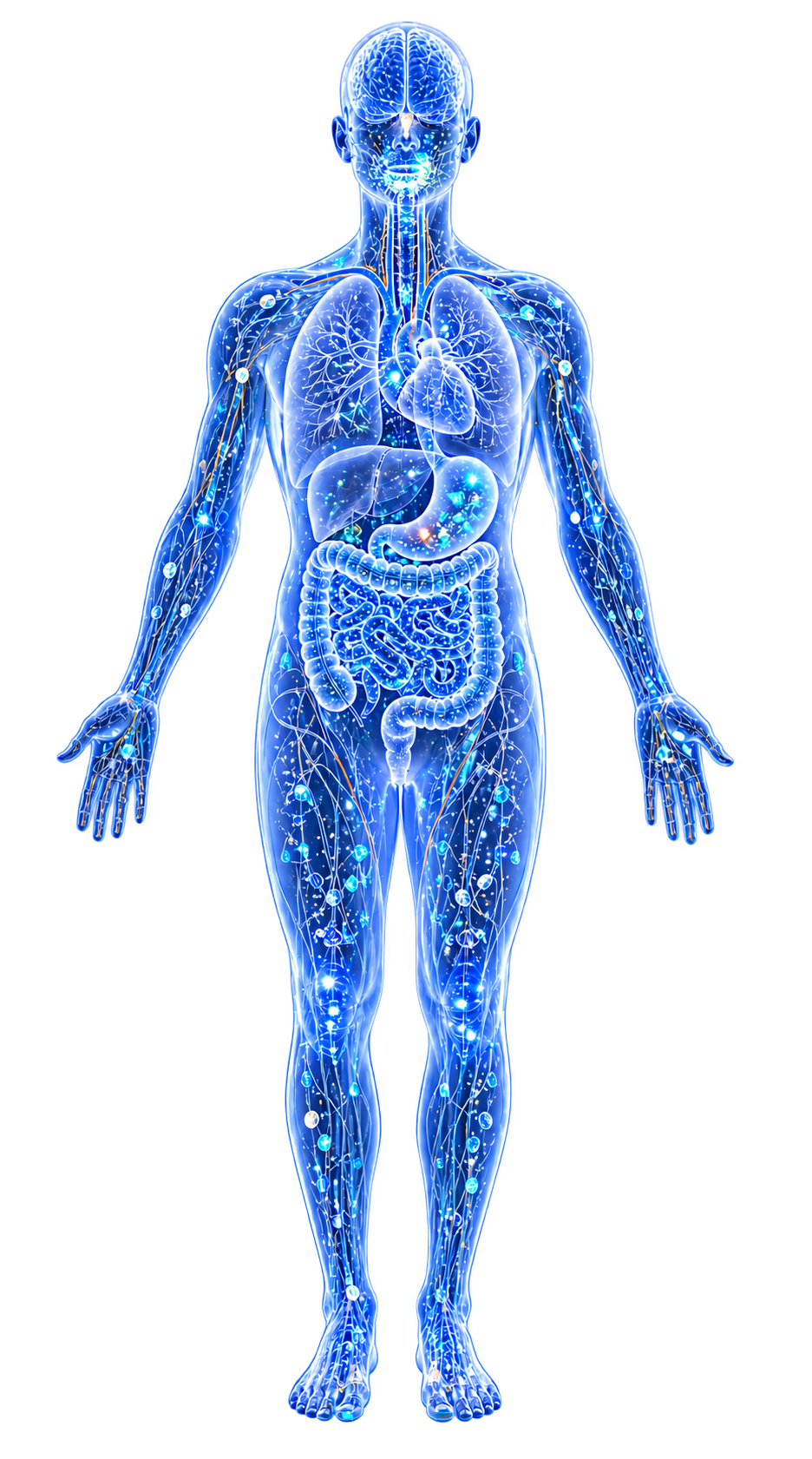
Nrf2 is a master transcription factor that regulates the expression of antioxidant and cytoprotective genes. It plays a central role in cellular defense against Oxidative Stress, electrophilic stress, and Metal-Driven Inflammation.
Under normal conditions, Nrf2 is sequestered in the cytoplasm by Keap1 and targeted for degradation; under stress, Nrf2 is released and translocates to the nucleus to activate antioxidant response element (ARE)-driven genes.
Evidence map1 cited passagesInspect provenance +
Disease relevance: Nrf2 dysregulation is implicated in multiple sclerosis (), neurodegeneration, and inflammatory bowel disease.
Relevance to WikiBiome#
Metal-Nrf2 interactions: Heavy Metals (cadmium, arsenic, lead) can activate or inhibit Nrf2, depending on dose and chronicity. Acute exposure activates Nrf2 as a defense response; chronic exposure can deplete the Nrf2 pathway.
Microbiome-Nrf2 crosstalk: Gut microbial metabolites (e.g., Butyrate, sulforaphane from dietary sources) can activate Nrf2, while Dysbiosis-associated metabolites may impair it. Disease relevance: Nrf2 dysregulation is implicated in multiple sclerosis ([1]The Diet-Multiple Sclerosis Connection: Oxidative Stress and Emerging MechanismsBucciero C, Croce A, Castellano G et al. · 2026Open reference 1 ↓), neurodegeneration, and inflammatory bowel disease.
Cross-References#
- oxidative stress
- Superoxide Dismutase
- Multiple Sclerosis
- butyrate
References 9
Numbered by first appearance in the article, then reconciled with its declared source list.
- 1
Bucciero C, Croce A, Castellano G et al. (2026). The Diet-Multiple Sclerosis Connection: Oxidative Stress and Emerging Mechanisms. Molecular Neurobiology.
- 2
Denise Mafra, Natalia A. Borges, Bo Lindholm et al. (2021). Food as Medicine: Targeting the Uraemic Phenotype in Chronic Kidney Disease. Nature Reviews Nephrology.
- 3
Zirun Jin, Yuzhuo Yang, Yalei Cao et al. (2023). Jin 2023 — Gut Metabolite 3-HPAA Rejuvenates Spermatogenic Dysfunction in Aged Mice through GPX4-Mediated Ferroptosis. Microbiome.
- 4
Shuya Lv, Jingrong Huang, Yadan Luo et al. (2024). Lv 2024 — Gut Microbiota Is Involved in Male Reproductive Function: A Review. Frontiers in Microbiology.
- 5
Tian M, Zeng X, Zhong Y et al. (2026). Tian et al. 2026 — Tripterygium Glycosides and Lactobacillus paracasei Sensitize EOC to Cisplatin via Keap1-Nrf2-GPX4 Pathway. Cellular and Molecular Biology Letters.
- 6
Natalia Kurhaluk, Piotr Kaminski, Halina Tkaczenko (2025). Kurhaluk 2025 — Oxidative Stress, Antioxidants, Gut Microbiota and Male Fertility. Cellular Physiology and Biochemistry.
- 7
Lesley Hoyles, Tom Snelling, Umm-Kulthum Umlai et al. (2018). Hoyles 2018 — Microbiome-Host Systems Interactions: Protective Effects of Propionate upon the Blood-Brain Barrier. Microbiome.
- 8
Eduardo Duarte-Silva, Sven G. Meuth, Christina Alves Peixoto (2022). Microbial Metabolites in Multiple Sclerosis: Implications for Pathogenesis and Treatment. Frontiers in Neuroscience.
- 9
Mouhammad Sharifa, Tanmay Ghosh, Omar A. Daher et al. (2023). Unraveling the Gut-Brain Axis in Multiple Sclerosis: Exploring Dysbiosis, Oxidative Stress, and Therapeutic Insights. Cureus.
Article network
Connect the evidence
Publicly readable discussion by ORCID-authenticated researchers. Questions, interpretation, methods, corrections, and new evidence stay attached to this record.
No discussion yet. Start with a precise question or a source-backed observation.
Published page changes
This record shows only material changes published on this page, including changes to its content, evidence, conclusions, or author context. Internal processes and discussion activity are excluded. Pending, declined, and withdrawn proposals remain private.
- published revision
Revised “Relevance to WikiBiome”: now reads “- Metal-Nrf2 interactions: heavy metals (cadmium, arsenic, lead) can activate”.
Revised “Relevance to WikiBiome”: changed “- Metal-Nrf2 interactions: Heavy metals (cadmium, arsenic, lead) can activate” to “- Metal-Nrf2 interactions: heavy metals (cadmium, arsenic, lead) can activate”. · Karen Pendergrass · +1 −1
Inspect exact Git diff ↗ - published revision
Added references: mafra-2021-food-as-medicine-uraemic-phenotype-ckd; jin-2023-3hpaa-spermatogenesis-ferroptosis; lv-2024-gut-microbiota-male-reproductive-function-review; tian-2026-tripterygium-lactobacillus-cisplatin-ovarian-cancer;…
Added references: mafra-2021-food-as-medicine-uraemic-phenotype-ckd; jin-2023-3hpaa-spermatogenesis-ferroptosis; lv-2024-gut-microbiota-male-reproductive-function-review; tian-2026-tripterygium-lactobacillus-cisplatin-ovarian-cancer; kurhaluk-2025-oxidative-stress-gut-microbiota-male-fertility; hoyles-2018-propionate-blood-brain-barrier-microbiome; duarte-silva-2022-microbial-metabolites-ms; sharifa-2023-gut-brain-axis-ms-dysbiosis-oxidative-stress. Removed references: bucciero-2026-diet-ms-oxidative-stress-nrf2; jayasinghe-2022-diet-gut-microbiome-ms-review. · WikiBiome Deploy Bot · +14 −9
Inspect exact Git diff ↗ - published revision
Created “Nrf2 (Nuclear Factor Erythroid 2-Related Factor 2)”: Nrf2 is a master transcription factor that regulates the expression of antioxidant and cytoprotective genes. It plays a central role in cellular defense against oxidative stress, electrophilic stress,…
Created “Nrf2 (Nuclear Factor Erythroid 2-Related Factor 2)”: Nrf2 is a master transcription factor that regulates the expression of antioxidant and cytoprotective genes. It plays a central role in cellular defense against oxidative stress, electrophilic stress,… Published sections: Overview; Relevance to WikiBiome; Cross-References. · WikiBiome Deploy Bot · +36 −0
Inspect exact Git diff ↗