

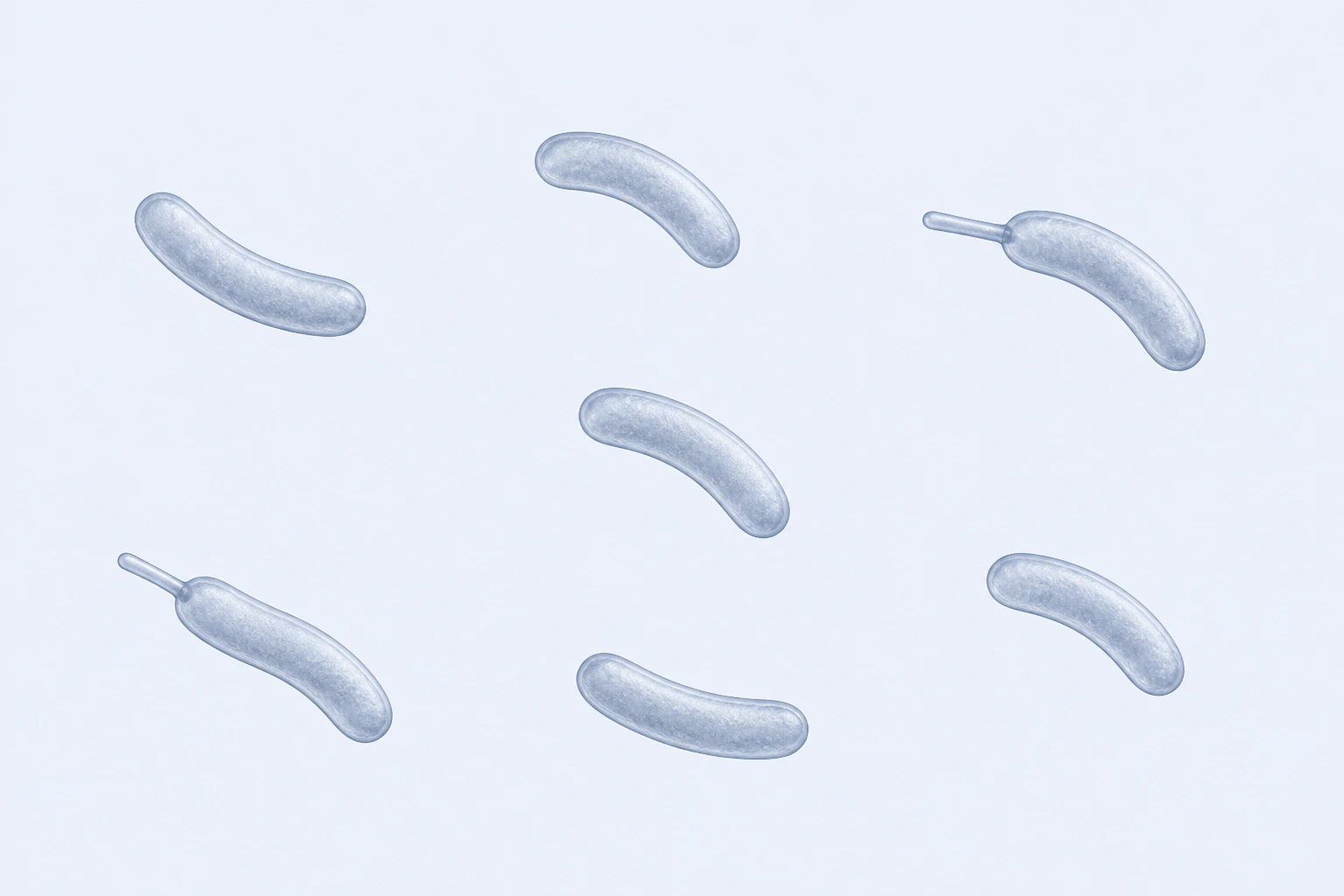
Selected stalked and non-stalked Caulobacter forms, shown as seven isolated rods. This static genus-level reconstruction is non-diagnostic, is not a lifecycle diagram, and is not a micrograph.
Scientific media record1 verified identifier
- Subject
- Caulobactertaxon · genus
- Identifiers
- NCBITaxon:75
- Review
- Editorial review completeIdentifiers authority-verified · Accessibility validated · · caulobacter|caulobacter-morphology-v1.webp
- Digital source
- Trained-algorithmic mediaCreated with a trained generative algorithm and reviewed by WikiBiome for subject identity, scientific framing, identifiers, provenance, and accessibility.
- Scientific basis
- Caulobacter — NCBI TaxonomyCaulobacter — LPSNCaulobacter vibrioides type strain — BacDiveCaulobacter stalk biogenesis
- License
- CC BY-SA 4.0Created
Caulobacter is a genus of Gram-negative obligate aerobic Alphaproteobacteria, with C. crescentus serving as one of the premier model organisms for studying bacterial cell biology.
Found primarily in oligotrophic freshwater environments, Caulobacter is not a gut commensal but has become invaluable for understanding how bacteria sense and respond to metal stress.
Metal Dependencies#
C. crescentus requires iron (acquired through TonB-dependent receptors) and zinc for essential metalloenzymes. What makes it exceptional is its well-characterized response to metal excess—particularly chromium and cadmium.
Studies in Caulobacter have mapped the transcriptomic and proteomic responses to toxic metal exposure, revealing conserved stress pathways (SOS response, Oxidative Stress defense, efflux pump upregulation) shared across Proteobacteria.
Ecological Role#
In its native freshwater habitat, Caulobacter thrives at low nutrient concentrations, making it a model for iron-limited growth. Its asymmetric cell division (producing a stalked cell and a swarmer cell) allows it to colonize surfaces in nutrient-poor conditions. These surface-attachment strategies parallel Biofilm initiation mechanisms in gut-associated bacteria.
Relevance to WikiBiome#
Though not a gut organism, Caulobacter's contributions to metal biology are directly relevant. Its cadmium and chromium tolerance mechanisms—efflux pumps, metal-binding proteins, oxidative stress responses—provide mechanistic templates for understanding how gut Proteobacteria respond to dietary and environmental metal exposure.
Cross-References#
- Cadmium—tolerance and stress response model
- Chromium—transcriptomic response studies
- Iron—TonB-dependent acquisition
- Mis-Metallation—toxic metal displacement mechanisms
References 4
Numbered by first appearance in the article, then reconciled with its declared source list.
- 1
Hiroki Mizutani, Shunsuke Fukui, Kazuki Oosuka et al. (2025). Biliary microbiome profiling via 16 S rRNA amplicon sequencing in patients with cholangiocarcinoma, pancreatic carcinoma and choledocholithiasis. Scientific Reports.
- 2
★Jordan Costafrolaz, Laurence Degeorges, Gael Panis et al. (2026). Costafrolaz 2026 — Asymmetric Envelope Surface Disposition of Secreted Protein YjbI Controls Bimodal Antibiotic Susceptibilities in C. crescentus. The EMBO Journal.
- 3
Laura N Vogt, Gael Panis, Anna Schapers et al. (2024). Vogt 2024 — Genome-Wide Profiling of Hfq-Bound RNAs Reveals the Iron-Responsive Small RNA RusT in Caulobacter crescentus. mBio.
- 4
Amira Khochtali, Marine Ote, Hugo Balon et al. (2025). Khochtali 2025 — Key Roles in Copper Efflux and Protein Homeostasis of the Intrinsically Disordered Region of a Bacterial Outer Membrane Channel. Journal of Biological Chemistry.
Article network
Mentioned here 6
Connect the evidence
Publicly readable discussion by ORCID-authenticated researchers. Questions, interpretation, methods, corrections, and new evidence stay attached to this record.
No discussion yet. Start with a precise question or a source-backed observation.
Published page changes
This record shows only material changes published on this page, including changes to its content, evidence, conclusions, or author context. Internal processes and discussion activity are excluded. Pending, declined, and withdrawn proposals remain private.
- published revision
Added references: mizutani-2025-biliary-microbiome-16s-rrna-pdac-cca; costafrolaz-2026-yjbi-envelope-zinc-stress-antibiotic-caulobacter; vogt-2024-hfq-srna-rust-iron-starvation-caulobacter; khochtali-2025-pcob-copper-efflux-disordered-region-caulobacter.
WikiBiome Deploy Bot · +9 −7
Inspect exact Git diff ↗ - published revision
Created “Caulobacter”: Caulobacter is a genus of Gram-negative obligate aerobic Alphaproteobacteria, with C. crescentus serving as one of the premier model organisms for studying bacterial cell biology. Found primarily in…
Created “Caulobacter”: Caulobacter is a genus of Gram-negative obligate aerobic Alphaproteobacteria, with C. crescentus serving as one of the premier model organisms for studying bacterial cell biology. Found primarily in… Published sections: Overview; Metal Dependencies; Ecological Role; Relevance to WikiBiome; Cross-References. · WikiBiome Deploy Bot · +55 −0
Inspect exact Git diff ↗