
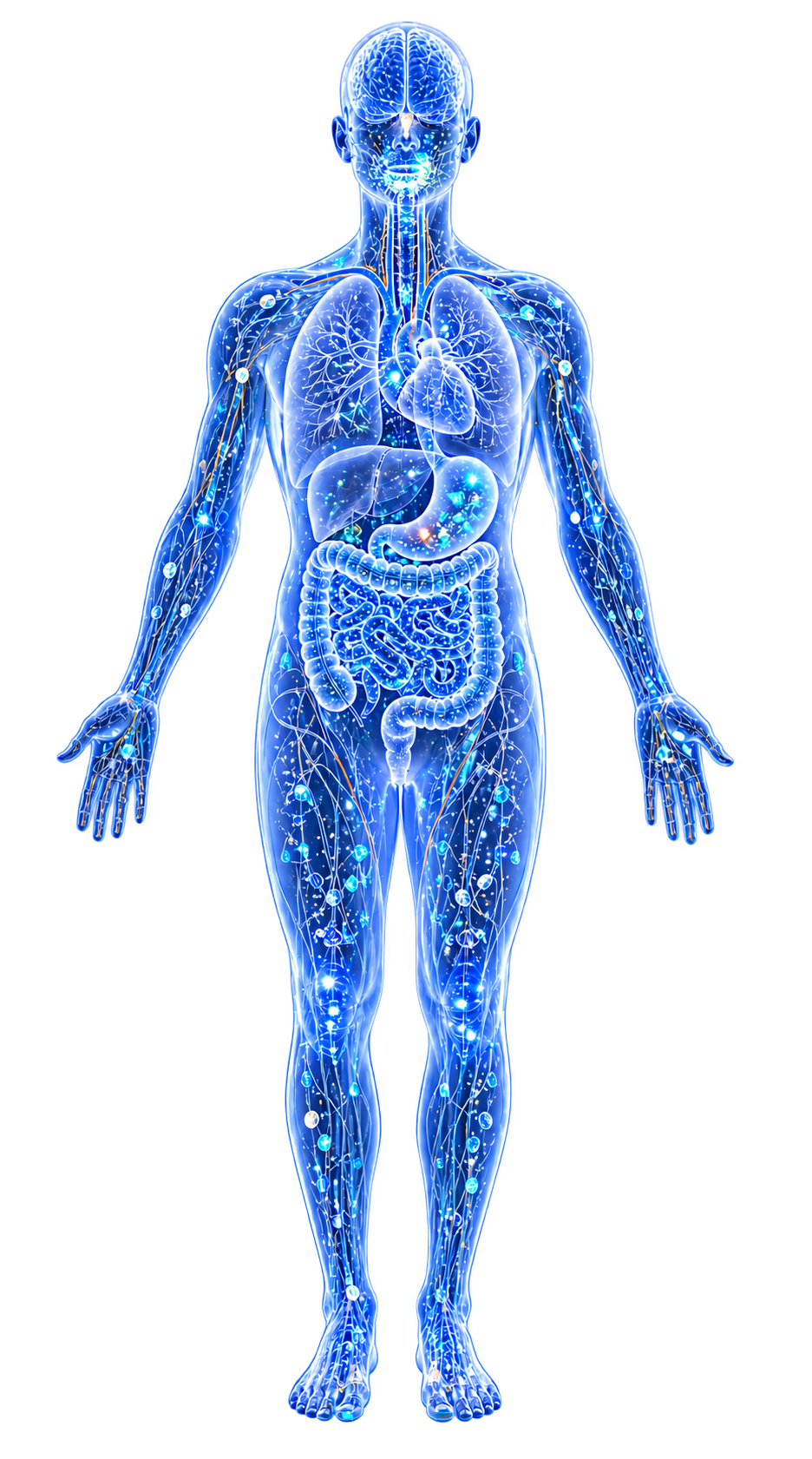
BDNF is the primary neurotrophin supporting neuronal survival, synaptic plasticity, and memory formation in the hippocampus and prefrontal cortex. Reduced BDNF is a consistent finding in depression, schizophrenia, and neurodegeneration. The Gut Microbiome modulates BDNF through Butyrate-mediated HDAC inhibition and vagal nerve signaling.
Evidence map5 cited passagesInspect provenance +
butyrate crosses the blood-brain barrier and acts as an HDAC inhibitor, directly upregulating BDNF gene transcription in the hippocampus.
Probiotic supplementation (Bifidobacterium, Lactobacillus) increases serum BDNF in clinical trials.
Gut microbiome composition correlates with dopamine, serotonin, and BDNF levels in schizophrenia.
Hashimoto's-associated neuroinflammation reduces BDNF in mouse models.
Schizophrenia: Reduced in prefrontal cortex; probiotics increase BDNF but do not significantly improve PANSS scores in early trials.
Microbiome → BDNF Pathway#
butyrate crosses the blood-brain barrier and acts as an HDAC inhibitor, directly upregulating BDNF gene transcription in the hippocampus.[1]Kamath 2025 — Gut Microbiome and Mental Health: Causation or Correlation? (Review)Srinivas Kamath, Elysia Sokolenko, Scott R Clark et al. · 2025Open reference 1 ↓
Germ-free mice show reduced hippocampal BDNF—colonization with commensals restores it. Probiotic supplementation (Bifidobacterium, Lactobacillus) increases serum BDNF in clinical trials.[2]A Systematic Review of the Effect of Probiotic Supplementation on Schizophrenia SymptomsNg QX, Soh AYS, Venkatanarayanan N et al. · 2019Open reference 2 ↓ Gut microbiome composition correlates with dopamine, serotonin, and BDNF levels in schizophrenia.[3]Functional Associations of the Gut Microbiome with Dopamine, Serotonin, and BDNF in Schizophrenia: A Pilot StudyGhorbani M, Joseph GBS, Tew MM et al. · 2024Open reference 3 ↓
Hashimoto's-associated neuroinflammation reduces BDNF in mouse models.[4]Hashimoto's Thyroiditis Induces Neuroinflammation and Emotional Alterations in Euthyroid MiceCai YJ, Wang F, Chen ZX et al. · 2018Open reference 4 ↓
Clinical Relevance#
Depression: Reduced BDNF is the most replicated biomarker; antidepressant efficacy correlates with BDNF restoration.
Schizophrenia: Reduced in prefrontal cortex; probiotics increase BDNF but do not significantly improve PANSS scores in early trials.[2]A Systematic Review of the Effect of Probiotic Supplementation on Schizophrenia SymptomsNg QX, Soh AYS, Venkatanarayanan N et al. · 2019Open reference 2 ↓
Exercise: Physical activity increases BDNF via both direct neuronal stimulation AND microbiome-mediated butyrate production.
Cross-References#
- butyrate—HDAC inhibitor that upregulates BDNF transcription
- Gut-Brain Axis—BDNF as microbiome-modulated neurotrophic mediator
- Serotonin—BDNF and serotonin have reciprocal regulatory relationships
- Depression—reduced BDNF as core biomarker
- Neuroinflammation—Metal-Driven Inflammation reduces BDNF
References 4
Numbered by first appearance in the article, then reconciled with its declared source list.
- 1
Srinivas Kamath, Elysia Sokolenko, Scott R Clark et al. (2025). Kamath 2025 — Gut Microbiome and Mental Health: Causation or Correlation? (Review). Preprint (no DOI found in document).
- 2
Ng QX, Soh AYS, Venkatanarayanan N et al. (2019). A Systematic Review of the Effect of Probiotic Supplementation on Schizophrenia Symptoms. Neuropsychobiology.
- 3
Ghorbani M, Joseph GBS, Tew MM et al. (2024). Functional Associations of the Gut Microbiome with Dopamine, Serotonin, and BDNF in Schizophrenia: A Pilot Study. Egyptian Journal of Neurology, Psychiatry and Neurosurgery.
- 4
Cai YJ, Wang F, Chen ZX et al. (2018). Hashimoto's Thyroiditis Induces Neuroinflammation and Emotional Alterations in Euthyroid Mice. Journal of Neuroinflammation.
Article network
Mentioned here 7
Pages linking here 1
Connect the evidence
Publicly readable discussion by ORCID-authenticated researchers. Questions, interpretation, methods, corrections, and new evidence stay attached to this record.
No discussion yet. Start with a precise question or a source-backed observation.
Activity and accepted changes
Accepted researcher context, editorial status, public discussion, and upstream Git revisions are shown together. Pending, declined, and withdrawn proposals remain private.
- published revision
Backfill gut microbiome concept links
Karen Pendergrass · +1 −1
Inspect exact Git diff ↗ - published revision
Backfill inflammation concept links
Karen Pendergrass · +1 −1
Inspect exact Git diff ↗ - published revision
massive wiki expansion: 149 stubs fixed, 100+ new pages, Rule 15 scan, keystone papers
WikiBiome Deploy Bot · +45 −0
Inspect exact Git diff ↗