

Barnesiella is a validly published genus of Gram-negative, obligately anaerobic bacteria in the phylum Bacteroidota and family Barnesiellaceae. NCBI Taxonomy assigns the genus NCBITaxon:397864, and LPSN lists Barnesiella Sakamoto et al. 2007 as the correct name.[1]NCBI Taxonomy — Barnesiella (NCBITaxon:397864)Author information pendingOpen reference 1 ↓[2]LPSN — BarnesiellaAuthor information pendingOpen reference 2 ↓
Sakamoto and colleagues established the genus with Barnesiella viscericola, isolated from chicken caecum, as its type species.[3]Barnesiella viscericola gen. nov., sp. nov., a novel member of the family Porphyromonadaceae isolated from chicken caecumMitsuo Sakamoto, Pham Thi Ngoc Lan, Yoshimi Benno · 2007Open reference 3 ↓
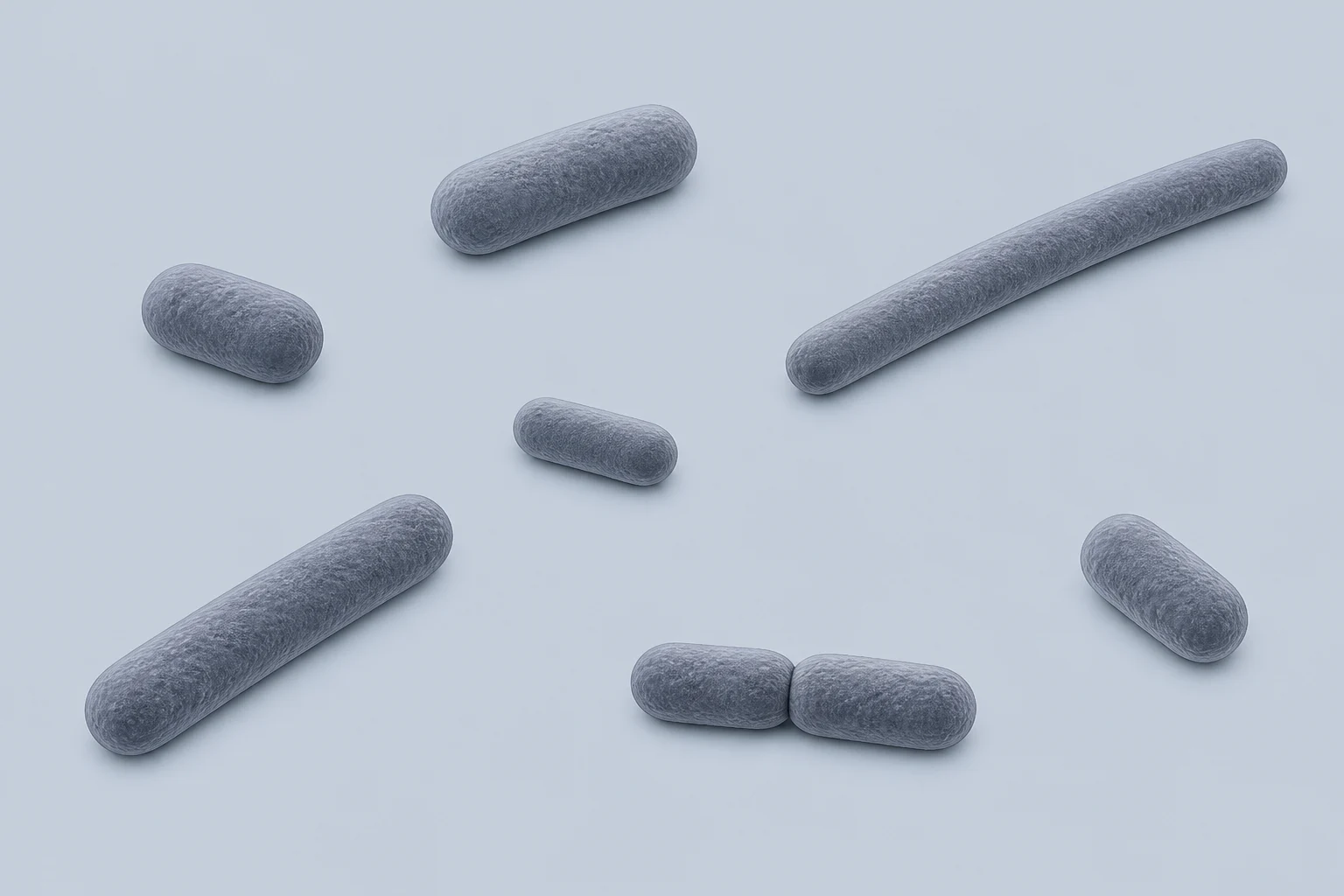
Selected genus-level Barnesiella rod morphology, shown as eight cells in seven groupings with illustrative relative scale. This reconstruction is not diagnostic and is not a micrograph.
Scientific media record1 verified identifier
- Subject
- Barnesiellataxon · genus
- Identifiers
- NCBITaxon:397864
- Review
- Editorial review completeIdentifiers authority-verified · Accessibility validated · · barnesiella|barnesiella-morphology-v1.webp
- Digital source
- Trained-algorithmic mediaCreated with a trained generative algorithm and reviewed by WikiBiome for subject identity, scientific framing, identifiers, provenance, and accessibility.
- Scientific basis
- Barnesiella — NCBI TaxonomyBarnesiella viscericola type strainBarnesiella intestinihominis sp. nov.Barnesiella intestinihominis species description
- License
- CC BY-SA 4.0Created
Evidence map3 cited passagesInspect provenance +
Barnesiella is a validly published genus of Gram-negative, obligately anaerobic bacteria in the phylum Bacteroidota and family Barnesiellaceae. NCBI Taxonomy assigns the genus NCBITaxon:397864, and LPSN lists Barnesiella Sakamoto et al. 2007 as the correct name. Sakamoto and colleagues established the genus with Barnesiella viscericola, isolated from chicken
Ata and colleagues reported that a genus printed as “Barnesella” was significantly decreased in stool from 14 women with stage 3/4 endometriosis compared with 14 controls. The study used V3–V4 16S rRNA sequencing and RDP classifier 2.12, and the printed label appears in its results text and table. Colonetti and colleagues later summarized the Ata result unde
WikiBiome therefore treats “Barnesella” as a source-transcription or source-label alias for routing and traceability, not as a valid bacterial name or nomenclatural synonym. The original spelling remains visible when the 2019 study or reviews that repeat its wording are described. The later spelling normalization does not by itself prove that the underlying
Endobiota Source-Label Caveat#
Ata and colleagues reported that a genus printed as “Barnesella” was significantly decreased in stool from 14 women with stage 3/4 endometriosis compared with 14 controls.
The study used V3–V4 16S rRNA sequencing and RDP classifier 2.12, and the printed label appears in its results text and table.[4]Ata 2019 — The Endobiota Study: Comparison of Vaginal, Cervical and Gut Microbiota Between Women with Stage 3/4 Endometriosis and Healthy ControlsBaris Ata, Sule Yildiz, Engin Turkgeldi et al. · 2019Open reference 4 ↓
Colonetti and colleagues later summarized the Ata result under the recognized spelling Barnesiella.[5]Gut and Vaginal Microbiota in the Endometriosis: Systematic Review and Meta-AnalysisTamy Colonetti, Maria Carolina Saggioratto, Antonio Jose Grande et al. · 2023Open reference 5 ↓
WikiBiome therefore treats “Barnesella” as a source-transcription or source-label alias for routing and traceability, not as a valid bacterial name or nomenclatural synonym.
The original spelling remains visible when the 2019 study or reviews that repeat its wording are described.[6]Miyashira 2022 — The Microbiome and EndometriosisCarlos H Miyashira, Fernanda Reali Oliveira, Marina Paula Andres et al. · 2022Open reference 6 ↓[7]Ser 2023 — Current Updates on the Role of Microbiome in Endometriosis: A Narrative ReviewHooi-Leng Ser, Siu-Jung Au Yong, Mohamad Nasir Shafiee et al. · 2023Open reference 7 ↓
The later spelling normalization does not by itself prove that the underlying sequence assignment was definitively resolved to Barnesiella; that would require reanalysis of the study data against an identified current reference taxonomy.
Evidence Boundary#
The cited Endobiota observation is genus-level, stool-specific, and derived from a small observational cohort. It does not establish causality, a species-level assignment, a vaginal or cervical Barnesiella signal, or a functional colonization-resistance mechanism.
Cross-References#
- Bacteroidetes (Bacteroidota)—parent phylum
- Endometriosis—context for the source-label observation
References 7
Numbered by first appearance in the article, then reconciled with its declared source list.
- 1
Author information pending. NCBI Taxonomy — Barnesiella (NCBITaxon:397864). NCBI Taxonomy.
- 2
Author information pending. LPSN — Barnesiella. List of Prokaryotic names with Standing in Nomenclature.
- 3
Mitsuo Sakamoto, Pham Thi Ngoc Lan, Yoshimi Benno (2007). Barnesiella viscericola gen. nov., sp. nov., a novel member of the family Porphyromonadaceae isolated from chicken caecum. International Journal of Systematic and Evolutionary Microbiology.
- 4
Baris Ata, Sule Yildiz, Engin Turkgeldi et al. (2019). Ata 2019 — The Endobiota Study: Comparison of Vaginal, Cervical and Gut Microbiota Between Women with Stage 3/4 Endometriosis and Healthy Controls. Scientific Reports.
- 5
Tamy Colonetti, Maria Carolina Saggioratto, Antonio Jose Grande et al. (2023). Gut and Vaginal Microbiota in the Endometriosis: Systematic Review and Meta-Analysis. BioMed Research International.
- 6
Carlos H Miyashira, Fernanda Reali Oliveira, Marina Paula Andres et al. (2022). Miyashira 2022 — The Microbiome and Endometriosis. Reproduction and Fertility.
- 7
Hooi-Leng Ser, Siu-Jung Au Yong, Mohamad Nasir Shafiee et al. (2023). Ser 2023 — Current Updates on the Role of Microbiome in Endometriosis: A Narrative Review. Microorganisms.
Article network
Mentioned here 2
Connect the evidence
Publicly readable discussion by ORCID-authenticated researchers. Questions, interpretation, methods, corrections, and new evidence stay attached to this record.
No discussion yet. Start with a precise question or a source-backed observation.
Activity and accepted changes
Accepted researcher context, editorial status, public discussion, and upstream Git revisions are shown together. Pending, declined, and withdrawn proposals remain private.
- published revision
Reconcile Barnesella source label
Karen Pendergrass · +27 −14
Inspect exact Git diff ↗ - published revision
massive wiki expansion: 149 stubs fixed, 100+ new pages, Rule 15 scan, keystone papers
WikiBiome Deploy Bot · +36 −0
Inspect exact Git diff ↗