
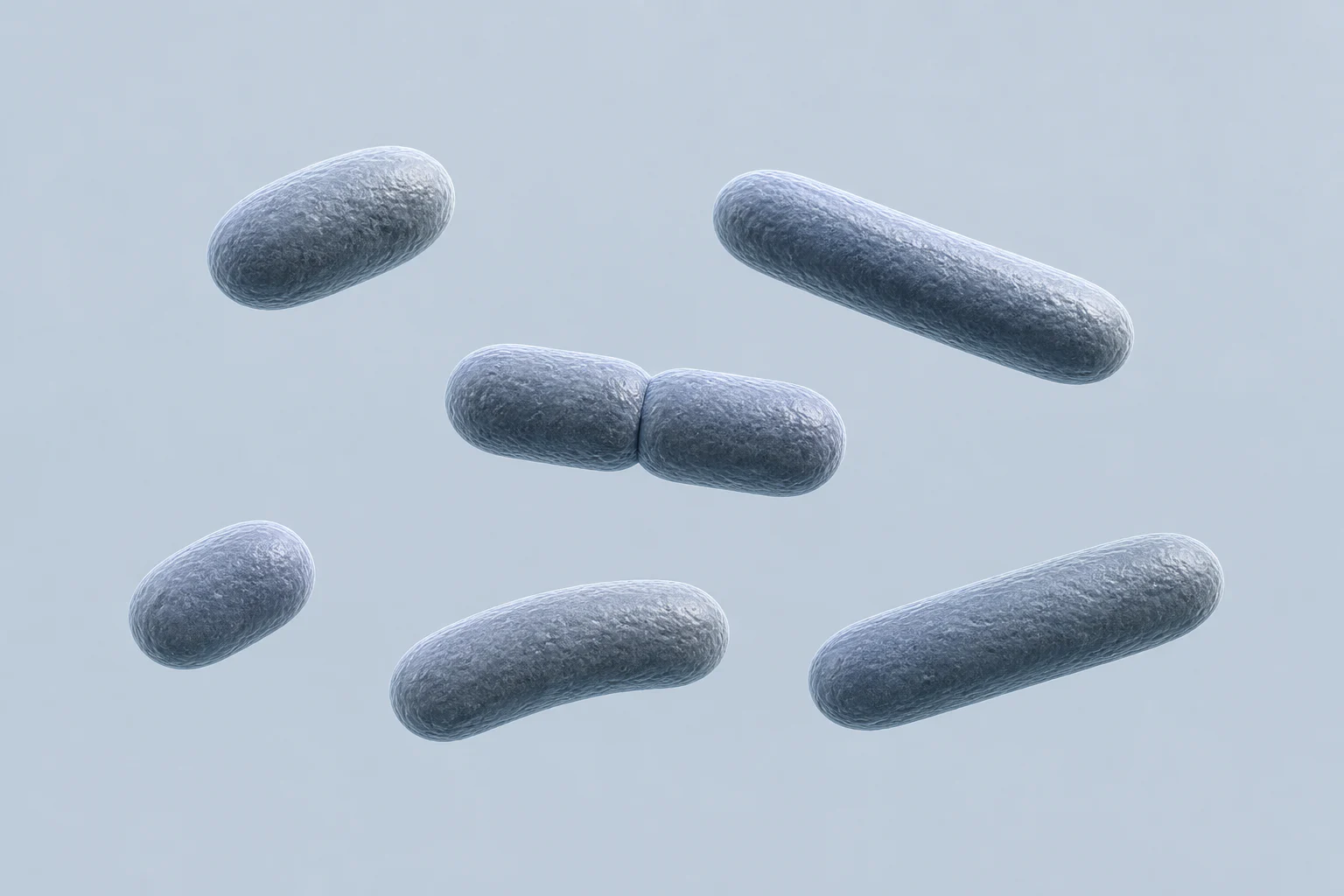
Representative Adlercreutzia morphology. Described members include coccobacillary and rod-shaped, nonmotile, non-spore-forming cells; this is an educational genus-level reconstruction, not a micrograph.
Scientific media record1 verified identifier
- Subject
- Adlercreutziataxon · genus
- Identifiers
- NCBITaxon:447020
- Review
- Editorial review completeIdentifiers authority-verified · Accessibility validated · · adlercreutzia|adlercreutzia-morphology-v1.webp
- Digital source
- Trained-algorithmic mediaCreated with a trained generative algorithm and reviewed by WikiBiome for subject identity, scientific framing, identifiers, provenance, and accessibility.
- Scientific basis
- Adlercreutzia — NCBI TaxonomyAdlercreutzia equolifaciens gen. nov., sp. nov.Emended description of Adlercreutzia
- License
- CC BY-SA 4.0Created
Adlercreutzia is a genus of Gram-positive, strictly anaerobic gut bacteria within the phylum Actinobacteria, named after Finnish researcher Herman Adlercreutz who pioneered phytoestrogen research. The genus is best known for producing equol, a potent bioactive metabolite derived from dietary isoflavones (soy, legumes), which has anti-estrogenic and antioxidant properties.
Evidence map2 cited passagesInspect provenance +
Adlercreutzia is consistently depleted in conditions characterized by estrogen dysregulation and neuroinflammation. In endometriosis, reduced Adlercreutzia abundance correlates with impaired equol production, potentially exacerbating estrogen-driven disease progression (). In multiple sclerosis, dietary interventions targeting the gut microbiome identify Adl
The genus has also been identified in reviews of gut microbiota and male reproductive function, where equol-producing bacteria influence testosterone metabolism and spermatogenesis ().
Disease Associations#
Adlercreutzia is consistently depleted in conditions characterized by estrogen dysregulation and neuroinflammation. In endometriosis, reduced Adlercreutzia abundance correlates with impaired equol production, potentially exacerbating estrogen-driven disease progression ([1]Svensson 2021 — Associations Between Endometriosis and Gut MicrobiotaAgnes Svensson, Louise Brunkwall, Bodil Roth et al. · 2021Open reference 1 ↓).
In multiple sclerosis, dietary interventions targeting the Gut Microbiome identify Adlercreutzia as a beneficial taxon whose restoration may support anti-inflammatory metabolite production ([2]Feeding the gut microbiome: impact on multiple sclerosisMatteo Bronzini, Alessandro Maglione, Rachele Rosso et al. · 2023Open reference 2 ↓).
The genus has also been identified in reviews of gut microbiota and male reproductive function, where equol-producing bacteria influence testosterone metabolism and spermatogenesis ([3]Lv 2024 — Gut Microbiota Is Involved in Male Reproductive Function: A ReviewShuya Lv, Jingrong Huang, Yadan Luo et al. · 2024Open reference 3 ↓).
Cross-References#
- Gordonibacter—fellow equol-producing genus
- equol—bioactive metabolite
- Endometriosis—depletion association
- Multiple Sclerosis—depletion association
- Estrobolome—estrogen-metabolizing gut community
References 3
Numbered by first appearance in the article, then reconciled with its declared source list.
- 1
Agnes Svensson, Louise Brunkwall, Bodil Roth et al. (2021). Svensson 2021 — Associations Between Endometriosis and Gut Microbiota. Reproductive Sciences.
- 2
Matteo Bronzini, Alessandro Maglione, Rachele Rosso et al. (2023). Feeding the gut microbiome: impact on multiple sclerosis. Frontiers in Immunology.
- 3
Shuya Lv, Jingrong Huang, Yadan Luo et al. (2024). Lv 2024 — Gut Microbiota Is Involved in Male Reproductive Function: A Review. Frontiers in Microbiology.
Article network
Connect the evidence
Publicly readable discussion by ORCID-authenticated researchers. Questions, interpretation, methods, corrections, and new evidence stay attached to this record.
No discussion yet. Start with a precise question or a source-backed observation.
Activity and accepted changes
Accepted researcher context, editorial status, public discussion, and upstream Git revisions are shown together. Pending, declined, and withdrawn proposals remain private.
- published revision
Backfill gut microbiome concept links
Karen Pendergrass · +1 −1
Inspect exact Git diff ↗ - published revision
massive wiki expansion: 149 stubs fixed, 100+ new pages, Rule 15 scan, keystone papers
WikiBiome Deploy Bot · +42 −0
Inspect exact Git diff ↗